
What is structural steel? A complete guide
Structural steel is an iron-carbon alloy, rolled into shapes with defined strength and geometry (beams, columns, plates), designed to carry loads in buildings, bridges, plants and industrial structures. It follows grade standards like ASTM A36, A992 and A572, which set its yield strength and chemistry.
Look at a half-built tower, a bridge or the frame of a plant. That skeleton of beams and columns is structural steel. It holds up almost everything industry builds, and yet few people know what sets it apart from any other piece of steel. Here’s what it is, which grades exist, what the shapes are called, and where it gets used. No filler.
What is structural steel?
Structural steel is an iron alloy with low carbon, rolled into shapes with standardized geometry and strength so it can carry weight. It’s the dominant framing material for non-residential construction, holding around 46% of that market in the United States (AISC).
Three measurable things make a steel structural. Its yield strength (the load it takes before it deforms for good), its ductility (how much it stretches before it breaks), and its weldability. A shape with those values guaranteed by standard is what an engineer can put into a calculation.
How does it differ from ordinary steel?
Ordinary steel gives you no load guarantee. Structural steel does: it meets a grade with a minimum yield strength, controlled chemistry, and a mill certificate that backs its traceability. That’s why a W-shape can hold up a building and a hardware-store bar can’t.
The grades that actually matter
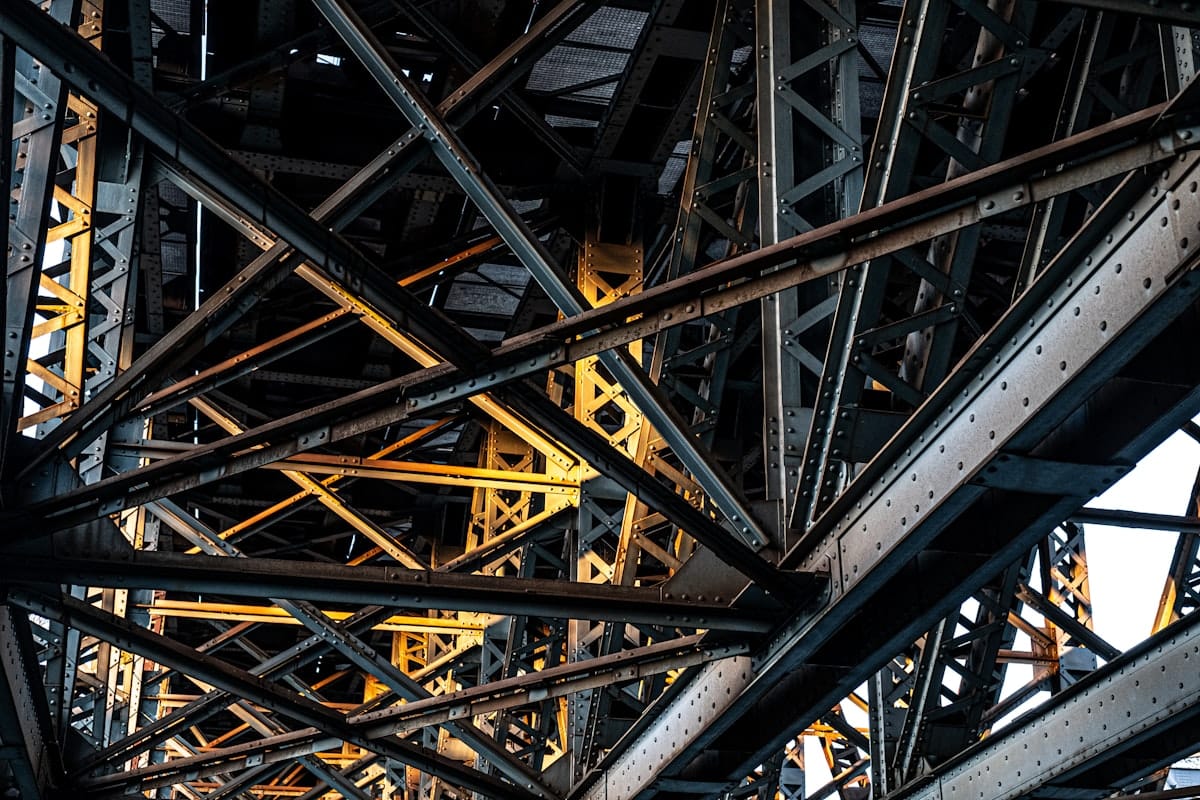
A steel grade sets its yield strength and chemistry. Three run industrial structure: ASTM A36, A992 and A572. A992 yields 345 MPa (50 ksi) and has been the standard for wide-flange shapes since 1998 (Wikipedia).
ASTM A36 is the classic carbon steel: cheap, easy to work, with a 250 MPa (36 ksi) yield. It suits plates, angles and general work. A992 took over the W-beam world thanks to a better strength-to-weight ratio and good weldability, ideal for the frame of tall buildings.
And when you need more strength without a heavier section? That’s where ASTM A572 comes in, a high-strength, low-alloy steel with grades 42, 50, 55, 60 and 65 by yield strength (Xometry). You’ll find it in bridges, transmission towers and heavy-equipment frames.
Shapes: beams, columns and plates
Structural steel is rolled into letter shapes, and each shape has a job. Roughly 80% of the structural components in heavy machinery are joined by arc welding on these shapes (Gitnux, 2026).
The W-shape (wide flange) is the workhorse for beams and columns. The HSS (tube), square or round, looks clean and resists twisting. Angles (L) and channels (C) build bracing and light frames, and plates form base plates, gussets and stiffeners.
Here’s a classic mix-up: the difference between a beam and a girder. One names a shape, the other a role in the structure. We break it down in our guide to I-beam vs girder.
Where structural steel is used
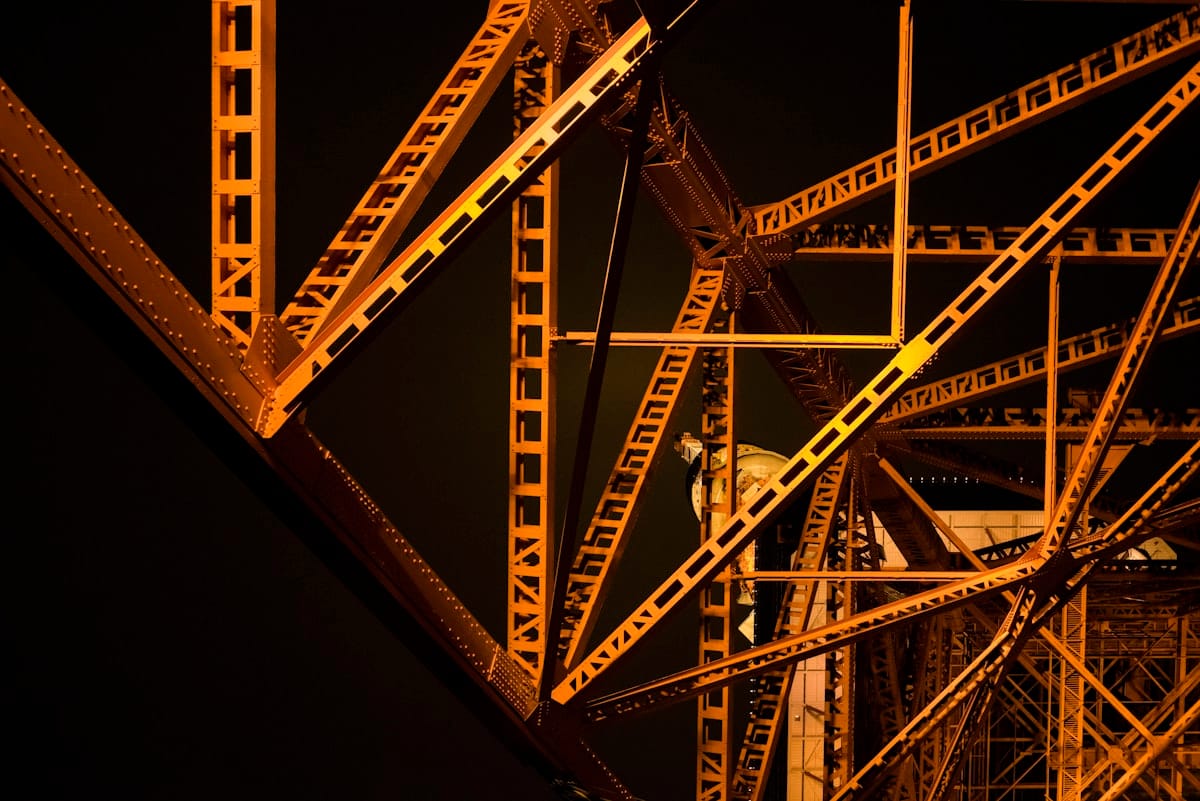
Structural steel sits inside almost all heavy infrastructure. Around 85% of infrastructure projects use arc welding to join their steel (Gitnux, 2026). These are its main fronts.
It raises the frame of buildings and the deck of bridges. It forms the pipe racks and support structures of refineries and petrochemical plants. And in the marine and port sector, it holds walkways, docks and equipment against the sea. At TAS we fabricate all of it to spec through our structural steel service.
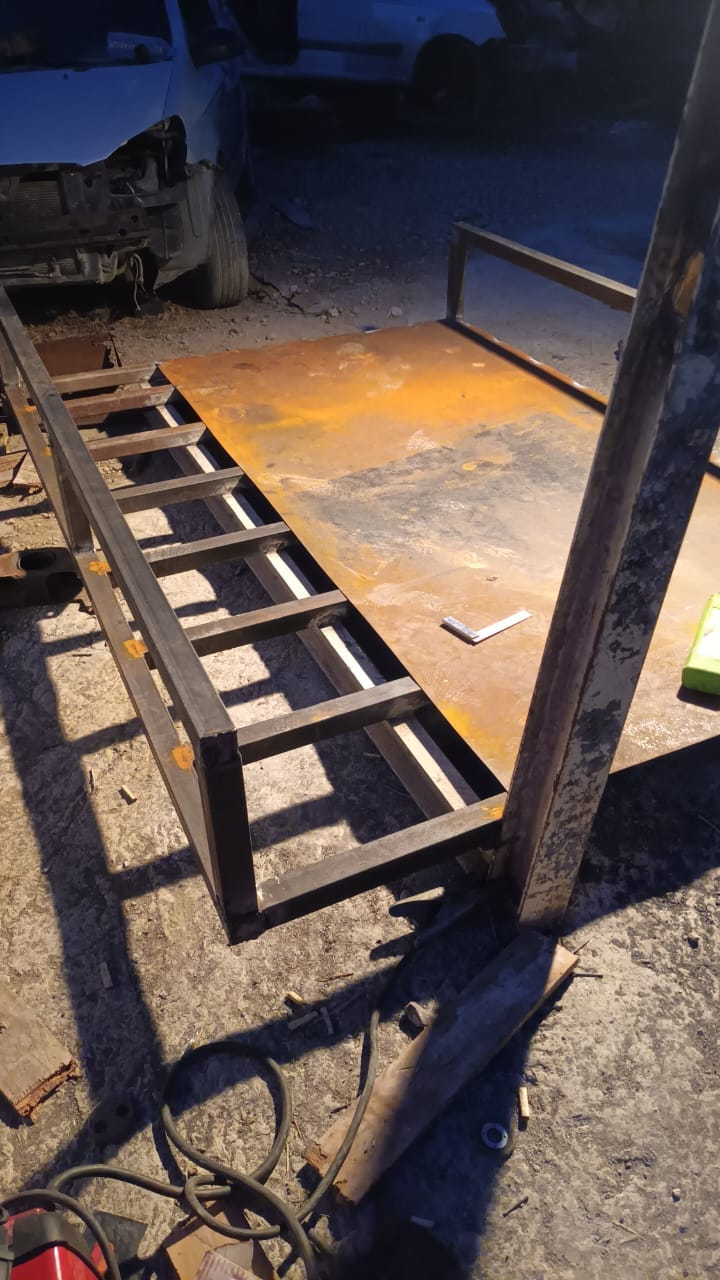
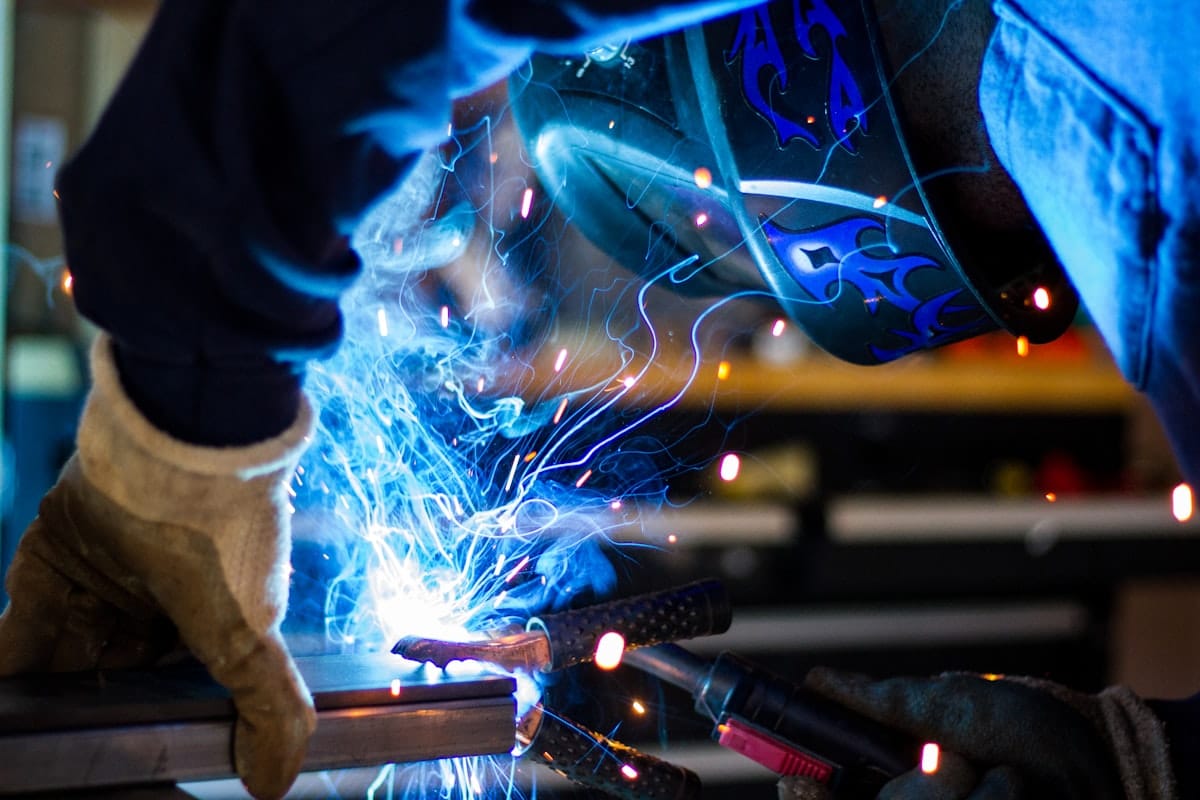
The photo is one of our own pieces: steel plate cut, fitted and welded onto a frame, ready to carry load. That’s structural steel outside the textbook.
How a steel structure is made
Fabricating structural steel takes more than cutting and welding shapes. It needs mill certificates, dimensional control at every stage, and code-compliant welding. Most of those joints are made by arc welding, by qualified welders (Wikipedia).
The flow is simple. First you review the drawings and the steel certificates. Then you cut and fit. Next you weld to AWS D1.1, the structural welding code, and verify every dimension. Last comes corrosion protection, which really matters in a marine environment like the Caribbean.
That joining step is where a structure is won or lost. If you want the processes, we cover them in our guide to types of welding, and the work is done by our industrial welding team.
Why steel still runs the job
Structural steel wins on numbers, not fashion. It’s the most recycled metal on earth, with recovery rates near 90% in construction (AISC). That counts for a lot in an industry watching the footprint of its materials.
It adds three practical wins. Its strength-to-weight ratio spans long distances with slender sections. It’s shop-fabricated and erected fast, which shortens the build. And it handles earthquakes well thanks to its ductility. So when a project has to carry real load, steel stays the answer.
- Structural steel is an iron-carbon alloy rolled into standardized shapes to carry load.
- It’s defined by yield strength, ductility and weldability, guaranteed by grades like ASTM A36, A992 and A572.
- The shapes (W, HSS, angles, channels, plates) each have a job.
- It’s used in buildings, bridges, plants, refineries and marine structures.
- It’s the most recycled metal and offers a strong strength-to-weight ratio and fast erection.
Go deeper into the structural steel cluster: structural steel shapes, structural steel grades and structural steel connections.
Frequently asked questions
Need structural steel built to spec?
TAS fabricates beams, columns and structures to AWS D1.1 and ASTM across Sint Maarten and the Caribbean.
Request a quoteView structural steel EN
EN ES
ES