
How to achieve quality welds: 10 keys
To achieve quality welds you control ten factors: material preparation, consumables, parameters, technique, heat input, interpass cleaning, position and fixturing, inspection, protection, and following the WPS. When all ten are met, the joint is strong, sound and traceable.
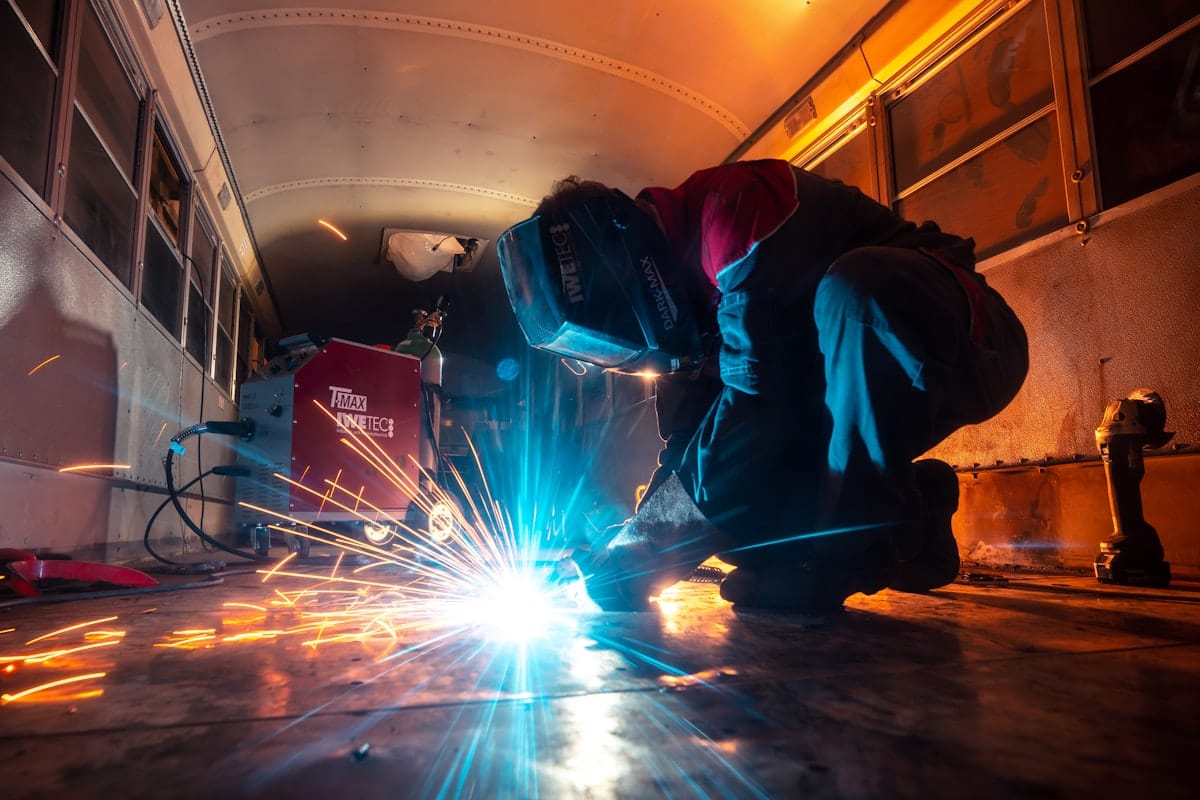
A quality weld doesn’t happen by luck. It comes from prepping the joint well, choosing the right consumable, dialing in the parameters and checking every bead as you go. At TAS we boil it down to ten keys we apply on every job, from an equipment frame to a process pipe run. Here they are, with the reason behind each one.
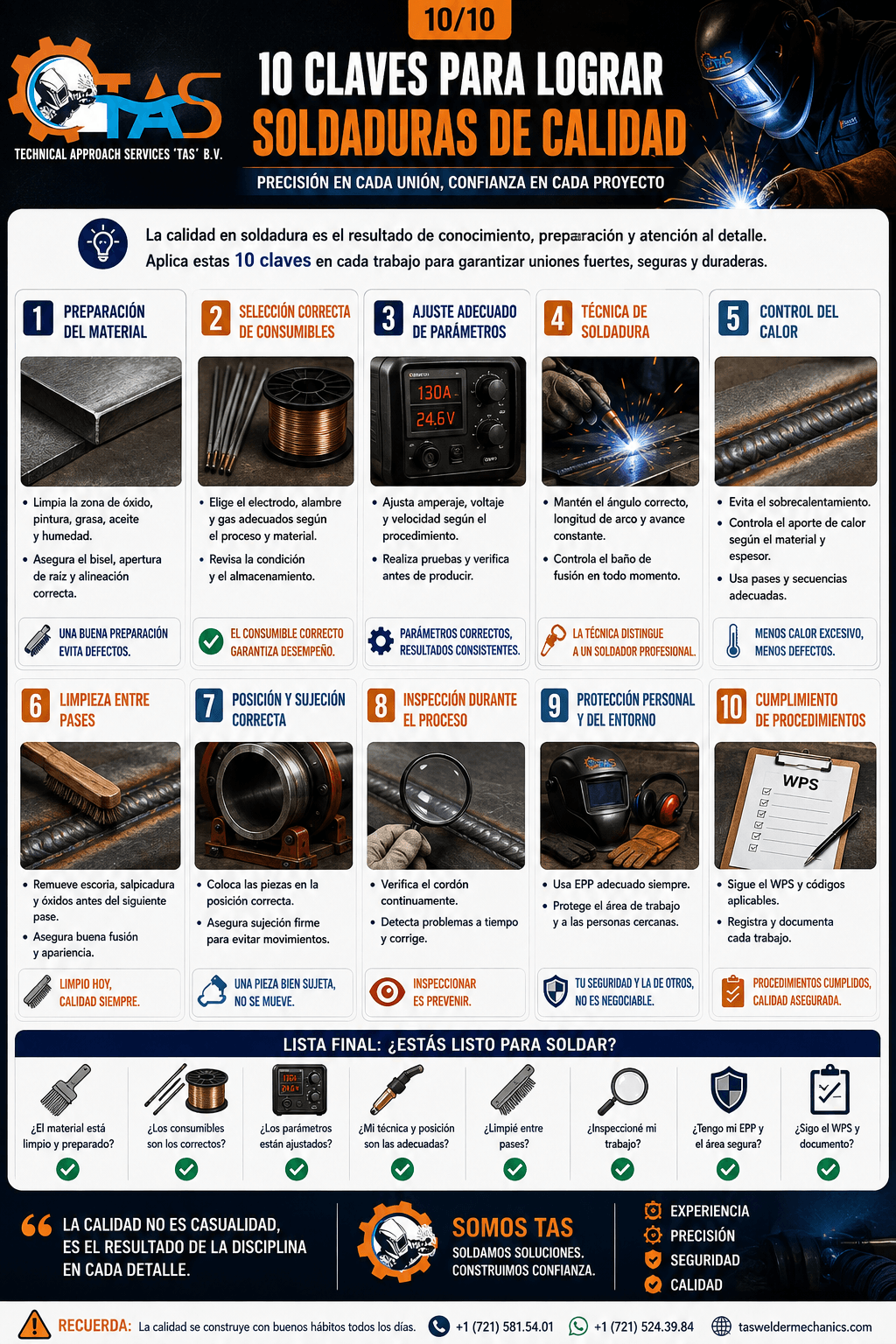
1. Prepare and clean the material
It all starts here. Clean the area of rust, paint, grease, oil and moisture before you strike the arc, because any contaminant ends up as porosity or lack of fusion inside the bead. Set the bevel, the root opening and the fit-up too. Good preparation stops most defects before they ever appear.
2. Choose the right consumables
Pick the electrode, wire and shielding gas by process and base material. The wrong consumable gives a weak bead even with flawless technique. Check condition and storage as well: a damp electrode adds hydrogen and invites cracking. The right consumable delivers consistent performance.
3. Dial in the parameters
Amperage, voltage and travel speed set penetration and bead shape. Match them to the procedure and the thickness, and run tests before you produce in volume. Correct parameters repeat; guessed ones bring spatter, undercut and lack of fusion.
4. Mind your technique
Technique is what separates a professional welder. Keep the work angle, arc length and travel speed steady, and watch the weld pool the whole time. An arc that’s too long cools the pool and traps gas; too short and the electrode sticks. A steady hand is what leaves an even bead.
5. Control heat input
Heat is a double-edged tool. Too much warps the part, burns the material and lowers the mechanical properties of the heat-affected zone. Control heat input by material and thickness, preheat when the code calls for it, and split the weld into proper passes and sequences. Less excess heat means fewer defects.
6. Clean between passes
On multi-pass welds, each layer must be clean before the next. Remove slag, spatter and oxides with a brush or grinder, because anything trapped between passes becomes an inclusion. Careful cleaning ensures full fusion and a good appearance. Clean now, quality always.
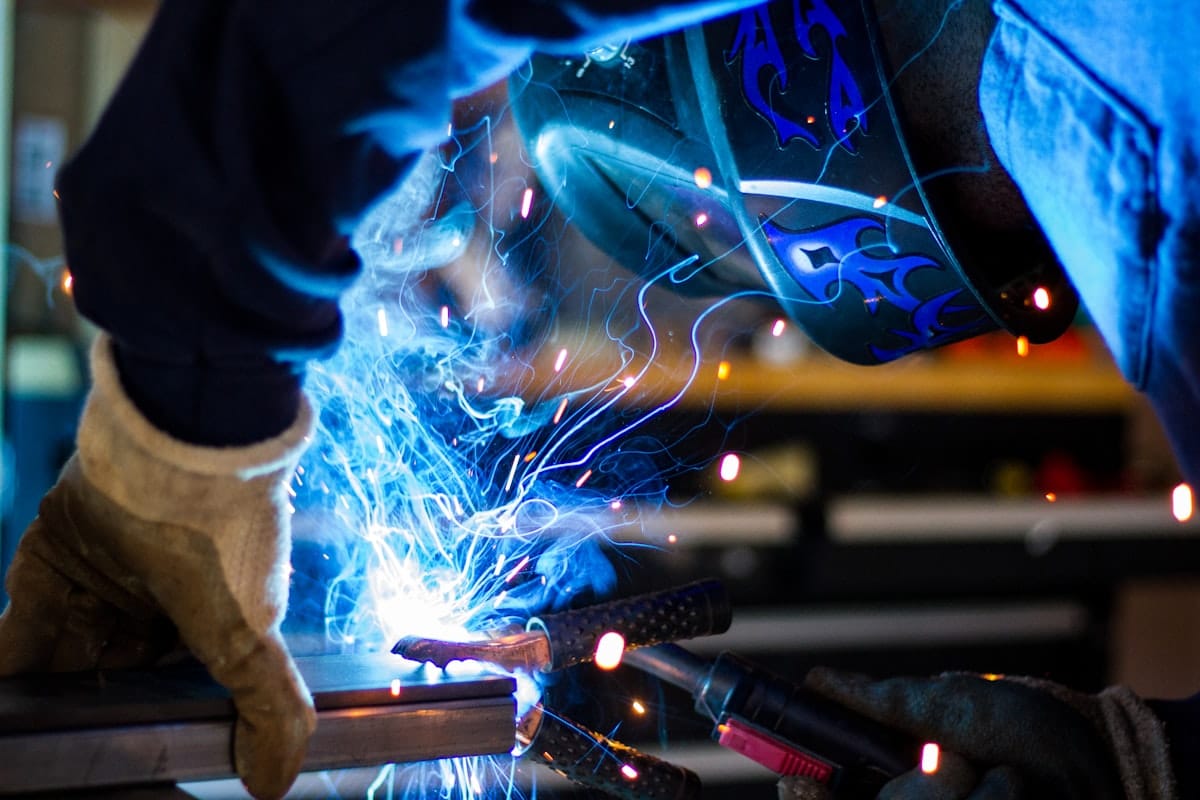
7. Position and fixture the part
Set the parts in the right position and clamp them firmly. A part that moves while you weld throws the joint out of line and ruins the bead. Fixturing also controls the distortion that heat causes. A well-clamped part stays put, and it shows in the result.
8. Inspect during the process
Don’t wait until the end to look. Check the bead continuously so you catch problems early and fix them while it’s still cheap. Visual inspection during the process catches undercut, lack of fusion and cracks before the passes pile on top. Inspecting is preventing.
9. Protect yourself and the area
Safety isn’t negotiable. Wear the right protective equipment every time: helmet, gloves, flame-resistant clothing and respiratory protection to suit the fumes. Protect the work area and the people nearby from the arc, sparks and gases too. Your safety and theirs comes first, and a controlled environment improves quality as well.
10. Follow the WPS and procedures
Quality becomes traceable when you follow the WPS (Welding Procedure Specification) and the applicable codes, such as AWS D1.1 or ASME Section IX. Record and document each job: material, filler, parameters and inspection. That paper trail is what an inspector or a procurement team asks for. Procedures met, quality assured. That’s how our industrial welding team works.
The final check before you weld
Before you strike the arc, a quick review saves rework. These eight questions boil the ten keys down to something any welder can run through on site.
- Is the material clean and prepared?
- Are the consumables right and in good condition?
- Are the parameters set to the procedure?
- Are my technique and position correct?
- Did I clean between passes?
- Did I inspect the work as I welded?
- Is my PPE on and the area safe?
- Am I following the WPS and documenting it?
Why quality is no accident
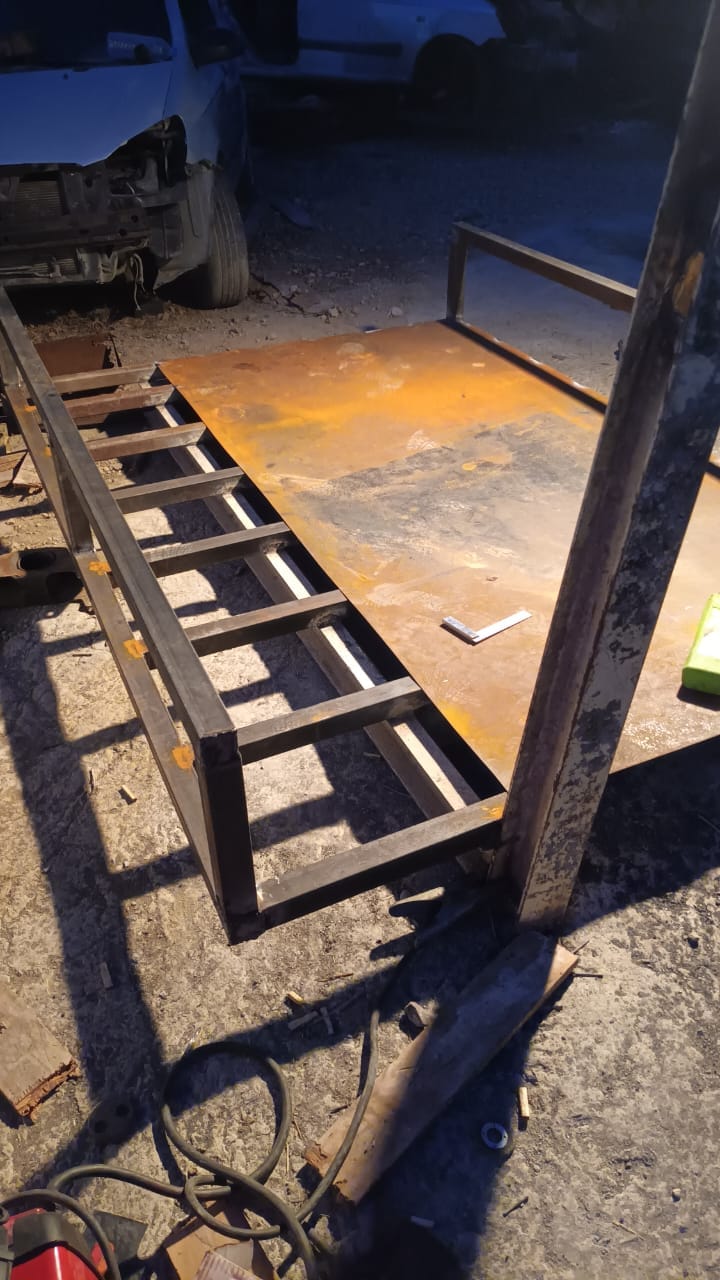
Weld quality is the result of knowledge, preparation and attention to detail, applied with discipline day after day. None of these ten keys is hard on its own; the hard part is meeting all of them, on every joint, under schedule pressure. If you want the foundation behind these habits, start with what industrial welding is and the types of welding and when to use each.
- Weld quality depends on ten controllable factors, not on luck.
- Most defects are prevented in preparation: clean material, good fit-up and the right consumable.
- Parameters, technique and heat-input control define a sound, repeatable bead.
- Inspecting during the process fixes issues early; PPE and the WPS close the job.
- Following the WPS and documenting each joint makes quality traceable to inspectors and buyers.
Frequently asked questions
Need certified, documented welding?
TAS welds to AWS D1.1 and ASME Section IX, with qualified WPS and inspection, across Sint Maarten and the Caribbean.
Request a quoteView industrial welding EN
EN ES
ES