
Structural steel connections: bolted vs welded
Structural steel connections join the members and carry the loads between them. There are two families: bolted (fast to erect on site, removable, using A325 or A490 bolts) and welded (stiffer and cleaner, made to AWS D1.1). They’re also classified by what they transfer: shear (simple) connections or moment (rigid) connections.
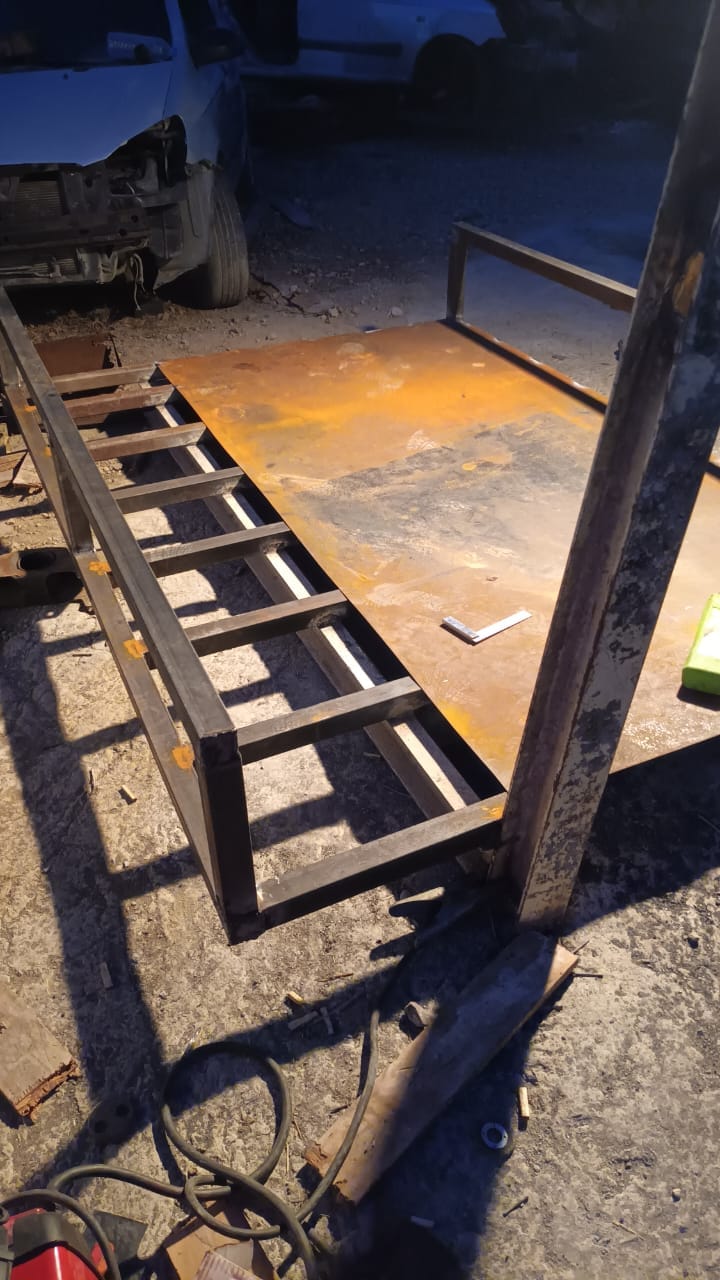
Engineers spend most of their time sizing beams and columns, but a steel structure almost never fails in the middle of a member. It fails where two members meet. The connection is where every load changes direction, and it’s where a small mistake gets expensive fast. This guide covers the two ways to join steel, the connection types you’ll see on any drawing, and how each one is checked before a building carries load.

What is a structural steel connection?
A structural steel connection is the joint where two or more members transfer forces between them: shear, tension, compression or moment. Around 80% of structural components in heavy machinery are joined by arc welding (Gitnux, 2026), and the rest lean on high-strength bolts. Almost every connection is one of those two, plus a plate.
The members themselves are just beams, columns and braces. What turns them into a frame is the connection. To see what’s being joined, our guide to structural steel shapes covers the W-beams, columns and angles that meet at every joint, and what is structural steel covers the material itself.
Why connections matter more than the beam
A member fails predictably; a connection fails suddenly. That’s why codes and inspectors focus on joints. A beam that’s slightly overloaded sags and warns you. A connection that’s under-designed or poorly welded can let go with no warning, and it takes the whole load path with it. Get the beam right and the connection wrong, and the beam never mattered.
This is the single insight that separates a fabricator from a metal shop: the connection is the product. It’s why every joint we make is engineered, documented and inspected, not just welded and forgotten.
Bolted connections
A bolted connection uses high-strength bolts, almost always ASTM A325 or the stronger A490, through holes in overlapping plates. It’s fast to erect, needs no power or welding inspection on site, and can be taken apart later. Field crews often prefer bolting because a crew can raise steel and torque bolts in weather that would stop welding.
Bolted joints come in two flavors. In a bearing connection the bolt shank presses against the hole and carries load in shear. In a slip-critical connection the bolts clamp the plates so hard that friction alone carries the load, which matters where movement or fatigue can’t be tolerated.
Welded connections
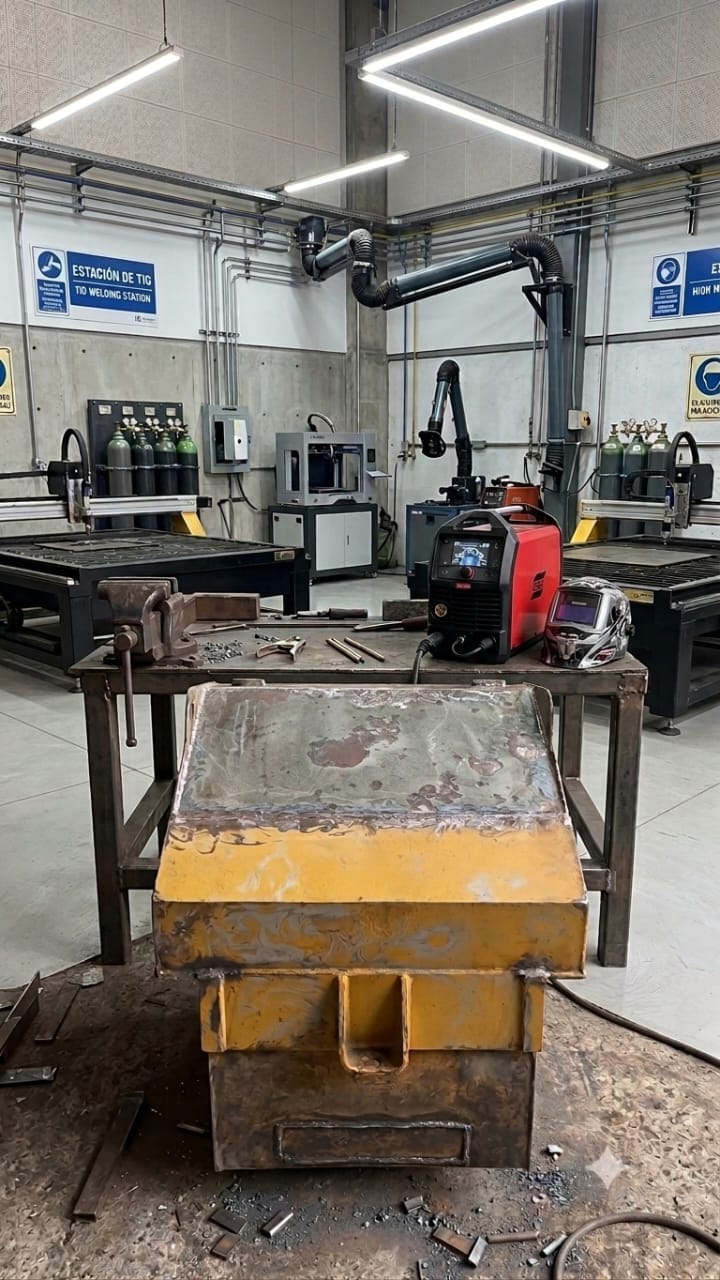
A welded connection fuses the members into one continuous piece of steel. The two workhorses are the fillet weld, laid in the corner where two parts meet, and the groove weld, used for full-strength butt joints. Welding gives the stiffest, cleanest joint and no bolt holes, which is why it’s preferred in the shop.
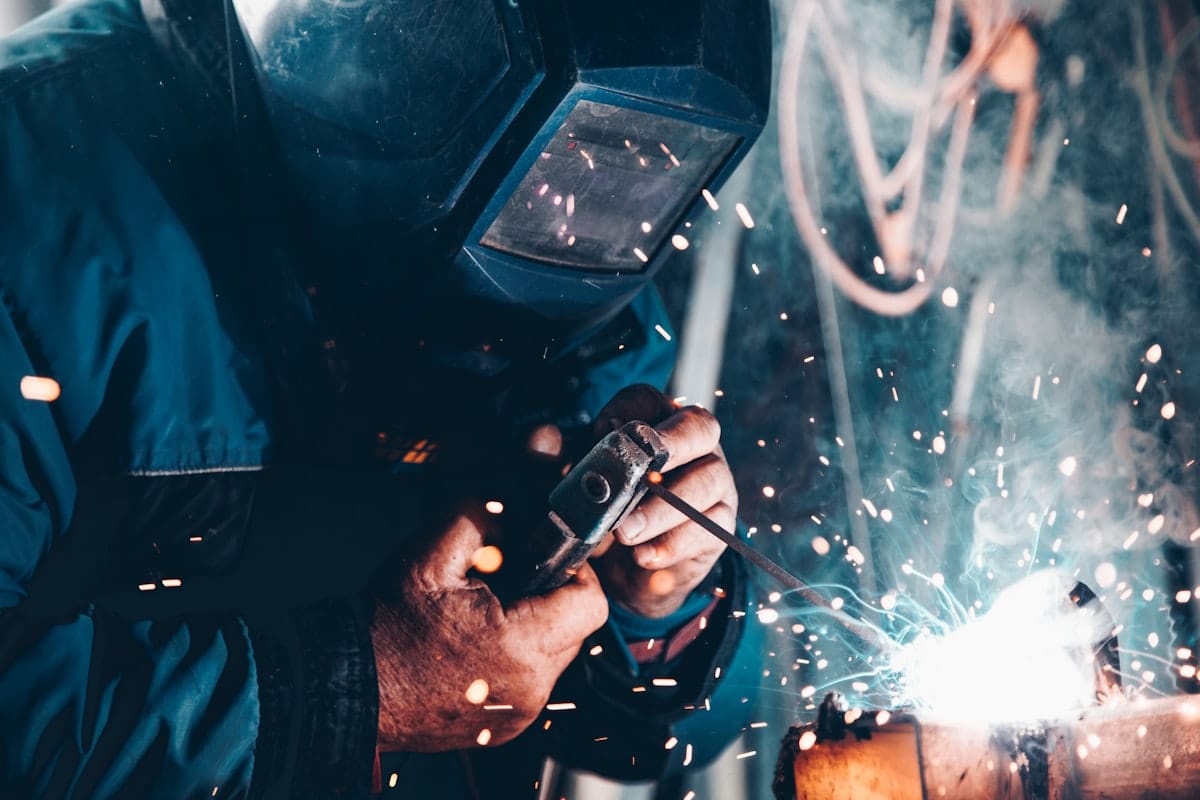
Welded joints only hold if the procedure holds. Every production weld follows a qualified procedure to AWS D1.1, with the right consumable, heat input and, for higher-strength steel, preheat. That’s the daily work of our industrial welding team.
Bolted vs welded: the honest comparison
Neither wins outright. Most real structures use both: welded in the shop where conditions are controlled, bolted in the field where speed and weather rule. Here’s how they stack up.
| Criterion | Bolted | Welded |
|---|---|---|
| Site speed | Fast | Slower |
| Stiffness | Lower (hole clearances) | High, continuous |
| Removable | Yes | No |
| Best conditions | Tolerates the field | Controlled shop |
| Inspection | Bolt tension / torque | Visual + NDT (PT, UT) |
| Appearance | Plates and bolts show | Clean, seamless |
Shear vs moment connections
Beyond bolts or welds, every connection is classified by what it transfers. A shear (simple) connection carries vertical load but lets the beam rotate, like a beam resting on a column through a small web plate. A moment (rigid) connection also transfers rotation, so beam and column bend together and resist sway. Frames that fight wind or earthquake depend on moment connections.
The practical difference is huge. A shear connection is cheap and quick; a moment connection is stronger but needs more welding, thicker plates and tighter inspection. A good designer uses moment connections only where the frame actually needs them, and shear connections everywhere else.
Common connection types you’ll see
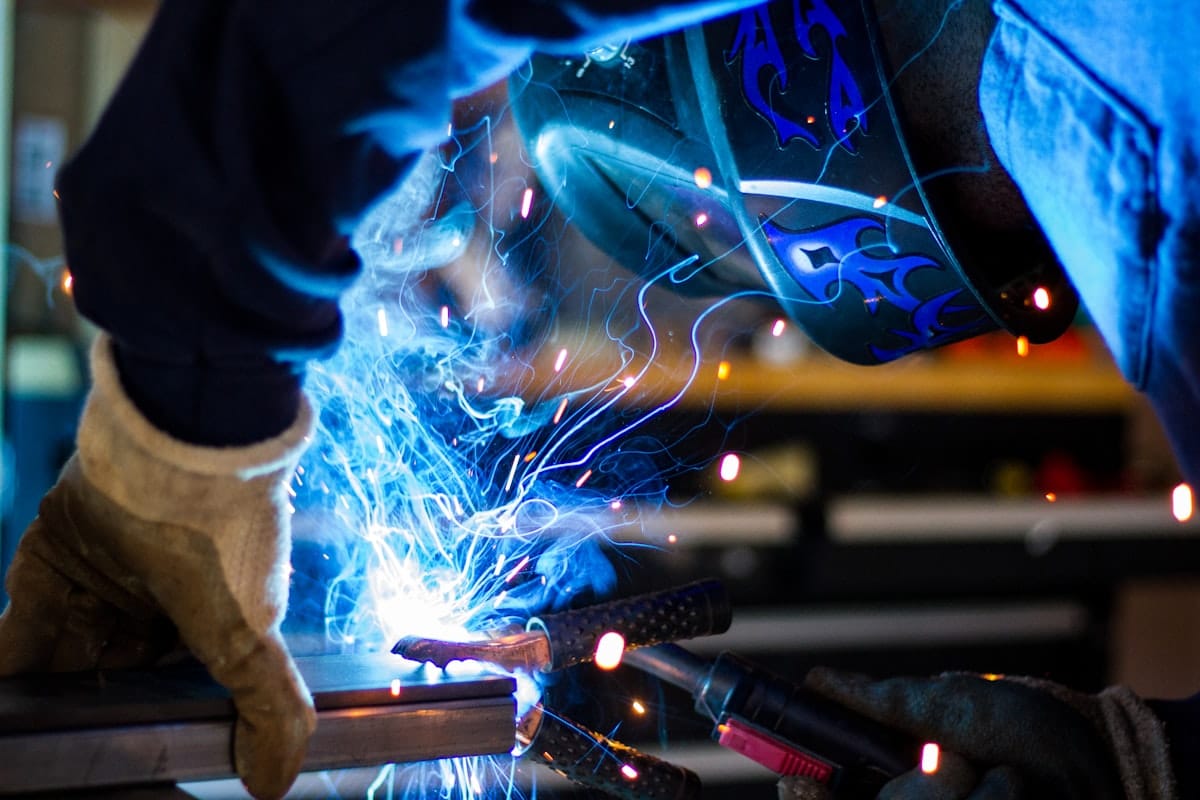
Most drawings reuse a handful of standard joints. The shear tab (a plate welded to the column, bolted to the beam web) is the everyday beam-to-column joint. The end plate welds a plate to the beam end and bolts it to the column. The base plate spreads a column’s load into its concrete footing with anchor bolts. And the moment connection welds or bolts both beam flanges to develop full rigidity.
Gusset plates: the connector of braces
When several members meet at one point, a gusset plate ties them together. You’ll see gussets at the joints of trusses and at bracing points, where diagonal braces, beams and columns all land on one plate. The gusset spreads each member’s load into the others through bolts or welds, and its thickness and shape are engineered, not eyeballed.
How connections are inspected
A connection is only as good as its verification. Bolted joints are checked by bolt tension or calibrated torque, confirming the clamp force the design assumed. Welded joints get visual inspection to AWS D1.1 first, then non-destructive testing where it counts: dye penetrant (PT) for surface cracks and ultrasonic (UT) for internal flaws on critical welds.
For a procurement or QA team, the paperwork is the proof: welder qualifications, the welding procedure (WPS/PQR) and inspection records. We document all of it as standard within our structural steel service, so the joint is not just made, it’s provable.
Connections in a Caribbean environment
Salt air changes the calculus. A bolted joint has crevices where moisture sits, so in exposed marine structures the detailing, coating and sometimes the choice to weld instead all matter more than they would inland. We weigh field speed against long-term corrosion on every exposed connection, and we can mobilize either a bolting crew or a welding crew, with the right procedures, to any island from our Sint Maarten base.
- Structures fail at the connection, not the beam; the joint is the product.
- Two ways to join: bolted (A325/A490) or welded (fillet and groove, AWS D1.1).
- Bolted is fast and removable; welded is stiffer and cleaner. Most jobs use both.
- Shear connections allow rotation; moment connections resist sway (wind, seismic).
- Common joints: shear tab, end plate, base plate, moment connection, plus gusset plates for braces.
- Verified by bolt tension for bolts, and visual + NDT (PT, UT) for welds.
Frequently asked questions
Need connections made to code?
Tasweldermechanics welds and bolts connections to AWS D1.1, with inspection and documentation, across Sint Maarten and the Caribbean.
Request a quoteView industrial welding EN
EN ES
ES