
ASME B31.3 process piping: what the code requires, from design to testing
ASME B31.3 is the code for process piping in refineries, chemical plants and similar facilities. It sorts piping into fluid service categories (Normal, D, M and high pressure) that set how welds are examined and tested. For Normal service that means 100% visual examination, at least 5% random RT or UT and a hydrostatic test at 1.5 times design pressure, adjusted for temperature (iFluids, Weld Fab World).
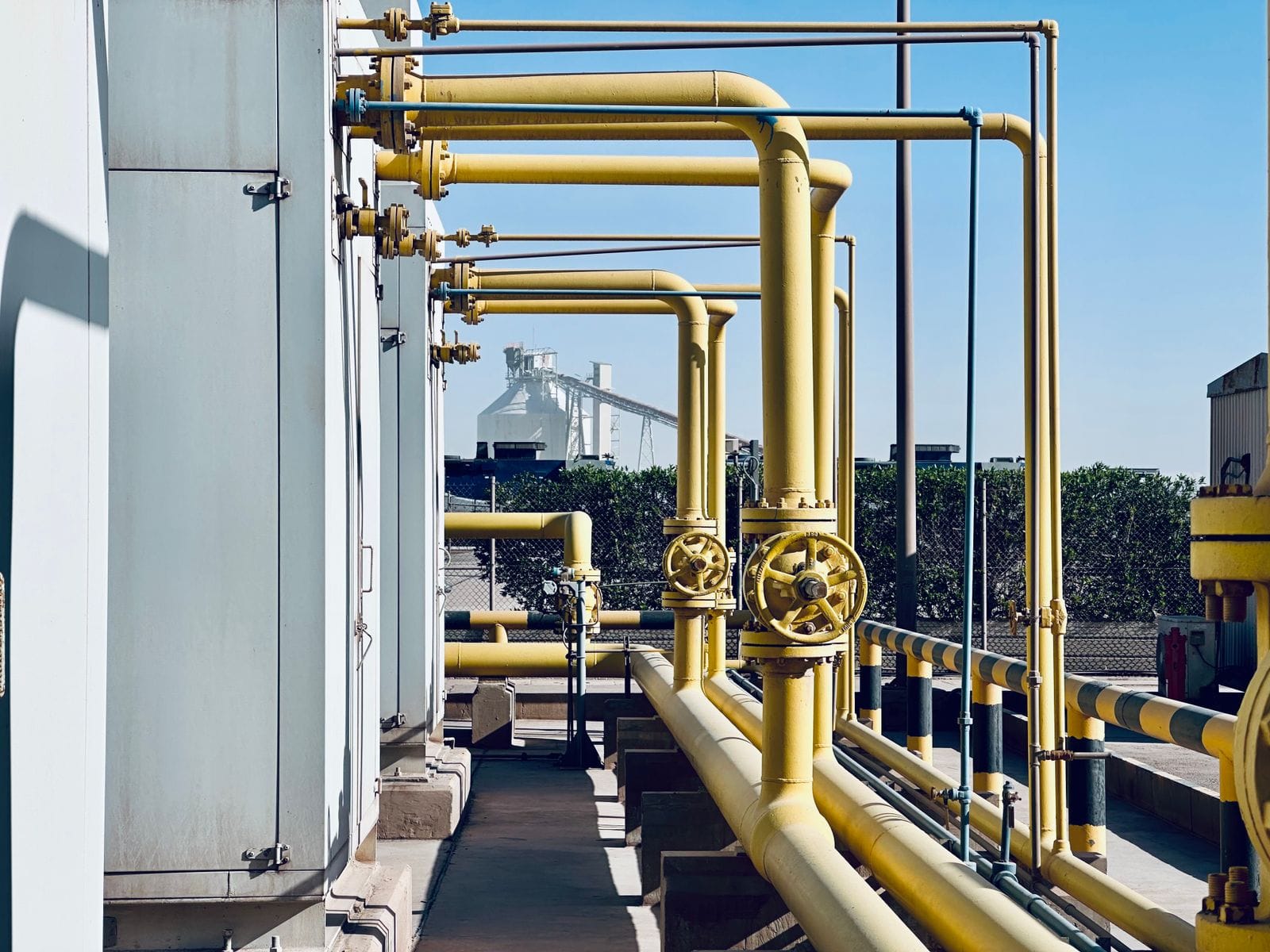
Walk through any refinery, chemical plant or power station and most of the pipe you see is built to one code. ASME B31.3 covers how process piping is designed, fabricated, examined and tested. The code itself is a paid standard, so this guide follows two published summaries and says where they agree. It’s written for owners and project teams who want to understand what to expect, not for engineers who need the clause text. Design decisions belong to your engineer and your edition of the code.
We’re a welding and fabrication contractor, so we come at this from the shop and field side. Our industrial welding service covers process piping work across the Caribbean.
What does ASME B31.3 cover?
B31.3 covers piping at refineries, chemical plants, pharmaceutical facilities and similar processing installations, including the pipe, fittings, flanges, valves, bolting, gaskets, expansion joints and supports that form the pressure boundary (Weld Fab World). It excludes fire protection piping, plumbing, boiler external piping and pressure vessels, which have their own codes.
The interface is worth knowing. B31.3 jurisdiction begins at the face of the first flange or first threaded joint of the process nozzle. The vessel nozzle itself falls under ASME Section VIII (Weld Fab World). On a job with tanks or vessels, that’s where two codes meet, and it’s worth agreeing who owns the boundary before fabrication starts.
What are the fluid service categories?
The code sorts piping by the fluid it carries, and the category then drives the examination and testing. Normal fluid service is the default, and most refinery and chemical plant piping falls in it. Category D is for benign fluids at modest conditions, Category M is for toxic fluids, and high-pressure service covers pressures beyond the standard flange classes (iFluids).
| Category | What it means | Examination | Testing |
|---|---|---|---|
| Normal | The default for process piping | 100% visual, plus 5% random RT or UT of butt welds | Hydrostatic at 1.5 times design pressure, adjusted for temperature |
| Category D | Non-flammable, non-toxic, not harmful to human tissue, up to 1,035 kPa (150 psi) and -29 to 186 °C | Lightest | Initial service leak test permitted |
| Category M | Fluids where one exposure to a very small quantity can cause serious, irreversible harm | 100% RT or UT of butt welds | Hydrostatic, plus a sensitive leak test |
| High pressure | Above the ASME B16.5 Class 2500 rating | 100% volumetric | More conservative allowables |
Choosing the category isn’t a formality. A fluid put in a lighter category than it deserves saves money on paper and creates risk on site. Which is why the code puts that decision with the owner.
Who decides what under B31.3?
The owner decides. The owner is responsible for establishing the fluid service classification and documenting it in the engineering design basis (Weld Fab World). The owner also designates a qualified inspector, and that inspector’s function can’t be delegated to the contractor’s quality control organization (iFluids).
In practice, that’s a useful check on us as much as on anyone. Our own QC checks our work. The owner’s inspector checks that our QC did its job. Put both in the contract, with named people.
How are welds examined?
Every category requires 100% visual examination of all welds. On top of that, Normal service requires random radiographic or ultrasonic examination of at least 5% of butt welds, applied per welder or welding operator. When a random examination finds a rejectable indication, two more welds by the same welder must be examined for every defective weld found (Weld Fab World).
Category M raises that to 100% RT or UT of all butt welds, and high-pressure piping needs 100% volumetric examination (iFluids). The reasoning follows the risk. The more harm a leak can do, the less the code leaves to sampling.
For how the RT and UT examinations differ, see our NDT methods comparison.
How is process piping tested?
The standard test is a hydrostatic test at 1.5 times design pressure, adjusted by the ratio of allowable stress at test temperature to that at design temperature (Weld Fab World). The test pressure can’t exceed the yield limit of any component, and it’s held for a minimum of 10 minutes before examination.
Where a water test isn’t practical, a pneumatic test at 1.1 times design pressure is the alternative. It needs a written procedure, owner authorization and a formal hazard assessment, because a gas-filled line stores far more energy than a water-filled one (Weld Fab World). Category M adds a sensitive leak test at a minimum of 110 kPa, and Category D piping can use an initial service test at operating pressure (iFluids).
Water testing has its own discipline around fill, venting and settlement. Our guide to hydrostatic testing of a storage tank shows the same principles applied to a tank, which is a different code but a similar mindset.
What about welding qualification and heat treatment?
All welding must follow a qualified welding procedure specification under ASME Section IX, and each welder must hold a current performance qualification for the process (Weld Fab World). Preheat and post-weld heat treatment depend on the material group and thickness, and the code’s tables set them. The details are for your engineer and welding inspector, not for a summary.
For the people side, see our guides to pipe welders (6G), welding positions and welding certification standards. They explain what a qualified pipe welder has proved and where that qualification stops.
What records does B31.3 expect?
The owner must keep the welding procedure specifications and their qualification records, welder qualification records, heat treatment records, examination records and pressure test records for the life of the installation or as the contract specifies (Weld Fab World). Build the record set as you go. Rebuilding it after a plant start-up is expensive and sometimes impossible.
What should a Caribbean project watch for?
Three things stand out, and they’re our reading, not part of the code. First, agree the fluid categories in the design basis early, because they set the inspection scope and therefore the price. Second, plan for examination services: a radiography or ultrasonic team may need to be mobilized to the island, so book it against the weld schedule. Third, keep the paperwork with the pipe. In salt air, a weld that waits weeks for its record gets forgotten.
If you’re weighing contractors, our guide on how to hire an industrial welder in the Caribbean lists what to ask for.
- B31.3 is the code for process piping in refineries, chemical plants and similar sites.
- The owner sets the fluid service category, which drives examination and testing.
- Every weld gets visual examination. Normal service adds at least 5% random RT or UT.
- The standard test is hydrostatic at 1.5 times design pressure, adjusted for temperature.
- Pneumatic tests need a written procedure, owner authorization and a hazard assessment.
- Keep procedure, welder, examination and test records for the life of the plant.
Frequently asked questions
Piping to fabricate or weld in the Caribbean?
Tasweldermechanics provides qualified industrial welding and fabrication for plants across the Caribbean, mobilized from Sint Maarten. Tell us your scope.
Request a quoteView industrial welding EN
EN ES
ES