
How an API 650 storage tank is built: fabrication and erection step by step
An API 650 tank is built in seven stages: foundation, bottom plates, shell courses, roof, weld inspection, hydrostatic test and handover. The standard covers tanks up to 2.5 psig (API 650). Shell courses go up bottom-first with cranes or top-first with hydraulic jacks, every joint type gets its own test, and the shell is normally tested by filling the tank with water before it takes product.
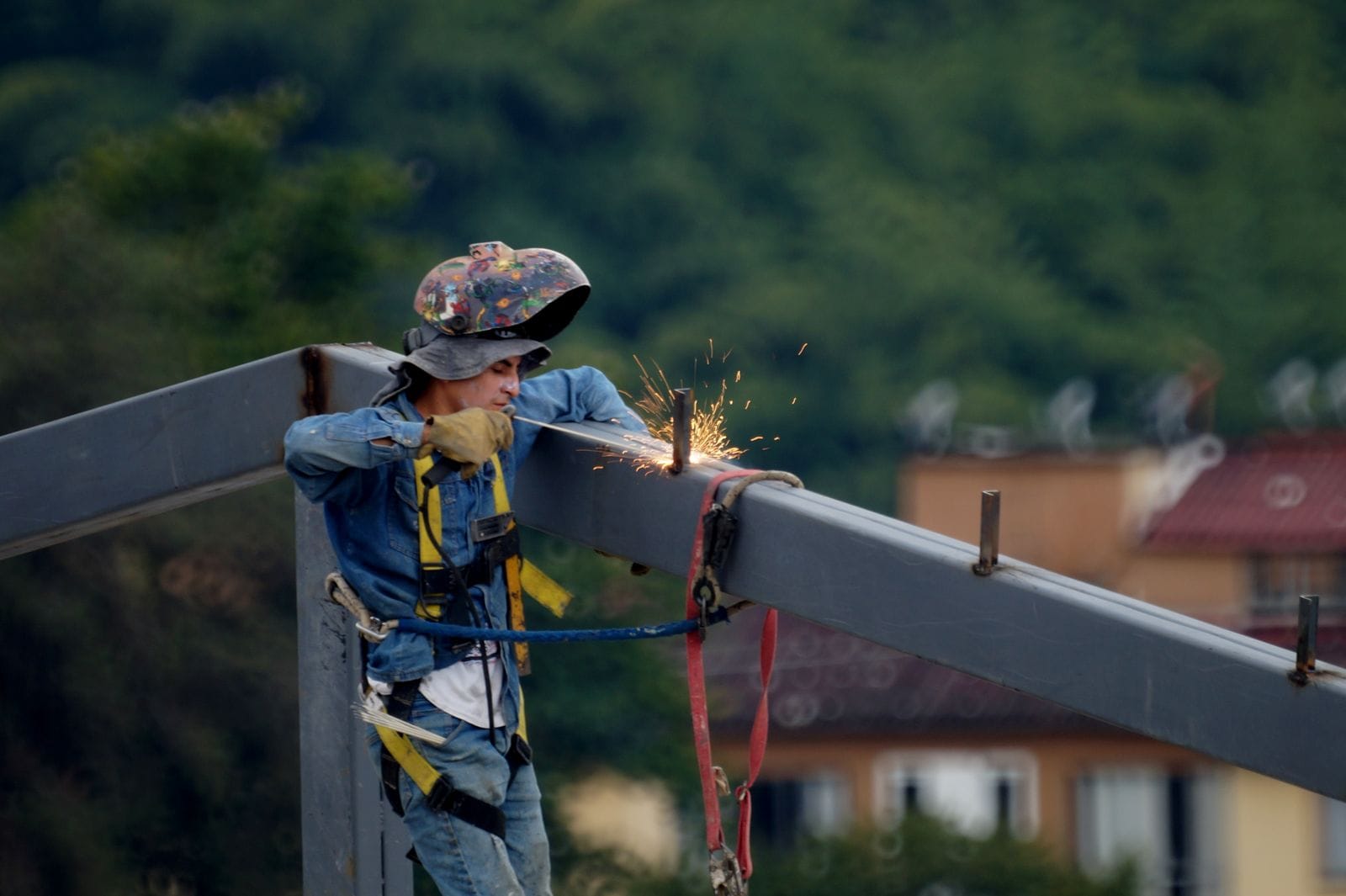
A storage tank doesn’t arrive as a tank. It arrives as a stack of numbered steel plates, and the site becomes a field factory. Building an API 650 tank means turning those plates into a level, leak-tight, code-compliant vessel, one weld at a time. This guide follows the sequence from foundation to handover, shows how the two main erection methods differ, and explains which tests prove the tank is ready to hold product.
What are the stages of building an API 650 tank?
API 650 sets minimum requirements for the material, design, fabrication, erection and inspection of welded, above-ground storage tanks (API Standard 650, scope). In practice a tank passes through seven stages, shown below. The current edition is the 14th, published in August 2025 (Intertek Inform).
The order is fixed by the work itself. You can’t weld a shell to a floor that isn’t down, and you can’t hydrotest a roof that isn’t on. If you’re still deciding what kind of tank to build, start with our guide to storage tank types, then come back here.
What happens before the first plate goes up?
API 650 applies to tanks whose entire bottom is uniformly supported (API Standard 650, scope). That single condition makes the foundation the first quality decision. A ringwall or a compacted pad has to carry the tank evenly and settle evenly, because an uneven base loads the shell in ways the design never assumed. On a coastal site, soil, groundwater and salt also make the underside of the floor a corrosion question from day one.
Plates are usually cut, numbered and rolled to the shell curvature before they reach the site, so crews can fit them by position. Before any production welding starts, the welding procedures and the welders have to be qualified. That’s the WPS/PQR paperwork we explain in our guide to welding certification standards.
How are the bottom and the shell built?
The bottom and annular plates go down first (What Is Piping). Bottom plates are joined with lap welds, while shell joints and annular plate joints are butt welds (Heartland Tank Services). Welders sequence the floor seams to keep distortion under control, because a floor that ripples is hard to test and harder to fix.
The shell is built in rings called courses. Each course is a set of rolled plates, welded along vertical seams first and then joined to the course below along a horizontal seam. Manual and semi-automatic processes such as stick and flux-cored do most of the work, and some contractors use automatic submerged arc, the so-called 3 o’clock method, for the long horizontal seams. Our guide to types of welding compares those processes.
Conventional vs jacking: how are shell courses erected?
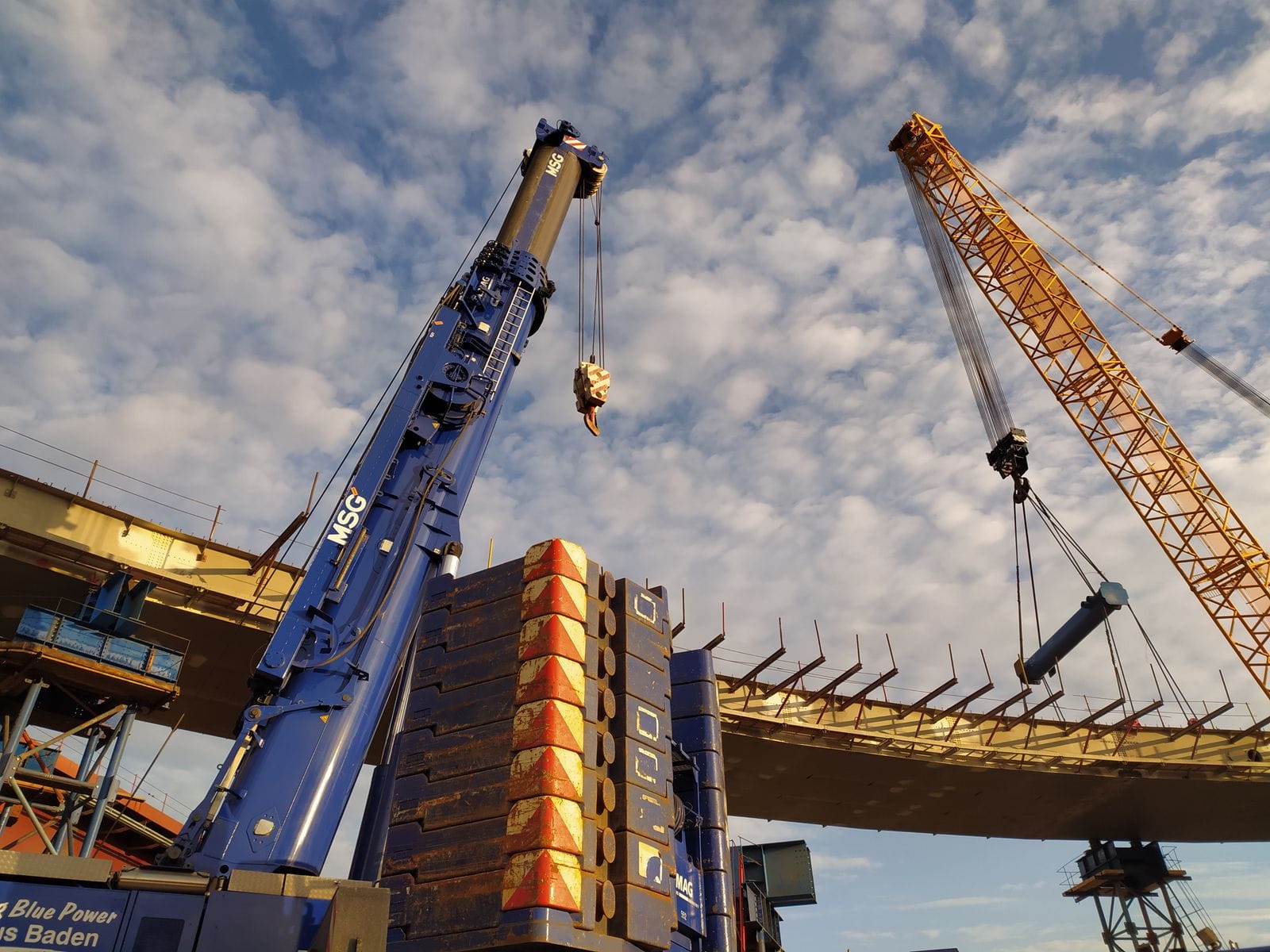
Shell courses go up in one of two ways. The conventional method builds bottom-up with cranes, in the order 1, 2, 3 and so on. The jacking method builds top-down: the top course and roof are assembled first, and hydraulic jacks lift the assembly as each lower course is inserted underneath (What Is Piping).
| Factor | Conventional (bottom-up) | Jacking (top-down) |
|---|---|---|
| Where crews work | At height, on the growing shell | At ground level |
| Equipment | High-capacity cranes | Hydraulic jacks, typically 8 or 12 tonnes, about 3,000 mm apart |
| Speed and cost | Longer schedule, higher cost | Faster and more economical |
| Dimensional control | Very good; shell close to design shape | Reduced compared with conventional |
| Limits | Suits all diameters and heights; wind is a risk while the shell is open | Not practical for large diameters with thick plate that needs double-sided welding |
The figures come from the What Is Piping comparison. Read them as typical values, since crews and equipment vary by contractor.
How is the roof installed?
A fixed roof is built from lap-welded plates over a supporting structure, and in the jacking method it goes up first, on the ground. A floating roof is a different job: it’s usually assembled inside the finished shell, and the water fill gives the first chance to check that it floats and moves freely. Functional testing of floating roof components is one of the stated goals of the hydrostatic test (TDI). The three roof designs and where each fits are in our storage tank types guide.
How are the welds inspected and tested?
Radiographic testing is applied to shell butt joints, annular plate butt joints and flush-type connections with butt joints, and it is not used on bottom or roof lap joints (Heartland Tank Services). API 650 Section 8 sets how many radiographs each welder needs, based on thickness, number of shell courses, number of T joints and linear feet. Each joint type gets the test that suits it.
| Joint | Test | What it shows |
|---|---|---|
| Shell butt joints, annular plate butt joints | Radiography (RT) | Sound weld interior, and a welder following the procedure |
| Bottom plate seams | Vacuum box test | No leak path through the seam; bubbles reveal porosity |
| Lap and fillet joints | Visual inspection, penetrating fluid test such as diesel | No through-thickness leak at the joint |
| Every weld | Visual inspection (VT) | Size, profile and surface quality |
What does the hydrostatic test involve?
A hydrostatic test fills the tank with water to confirm it is leak-tight, that the welds can take operating conditions and that the foundation settles uniformly (TDI). It’s the one check that loads the whole tank at once, shell, floor, nozzles and foundation together. Crews walk the seams while it fills, watch the manways and nozzles, and measure settlement at set points around the base. Our hydrostatic testing guide covers the fill levels, filling rates and settlement limits in API 650. The standard asks for the water fill when water is available, and allows other leak tests only when there isn’t enough.
Many owners take the test out of the contract, according to TDI. We’d argue against that, because nothing else proves the tank as a system. On an island, the water is a logistics item too: sourcing it, and disposing of it afterward, takes planning.
Containment around the tank is part of the site design. Our guide to secondary containment covers dikes, berms and liners.
What happens after the test: coating, records and handover?
Once the tank passes, crews finish the protective coating, fit the nameplate and assemble the records. Those records are the tank’s paper trail: welding procedures and welder qualifications, material mill certificates, and every inspection and NDT report. We explain why that package matters in our guide to choosing a welding contractor. After handover the tank enters service, and API 653 governs its inspection. Our corrosion inspection checklist covers the field side, and our guide to API 653 inspection intervals covers how often.
What changes when you build a tank on a Caribbean island?
The Atlantic hurricane season runs from June 1 to November 30 (NOAA National Hurricane Center). Wind damage while the shell is open is listed as a drawback of conventional erection, so the schedule and the plan for a partly built tank matter more in those months. Everything else has to arrive too: crews, jacks or cranes, welding machines and plate, usually by sea.
That’s the work we do. Tasweldermechanics fabricates and erects storage tanks across the Caribbean, mobilized from Sint Maarten. See industrial storage tank fabrication or tell us your scope.
- An API 650 tank is built in seven stages, from foundation to handover.
- The foundation has to support the entire bottom uniformly; API 650 applies on that condition.
- Shell courses go up bottom-first with cranes or top-first with hydraulic jacks. Size and plate thickness usually decide.
- Each joint type has its own test: radiography for shell butt joints, vacuum box for floor seams.
- The hydrostatic test proves leak-tightness, weld integrity and even settlement.
- On an island, mobilization and hurricane season shape the schedule.
Frequently asked questions
Planning to build a storage tank in the Caribbean?
Tasweldermechanics fabricates and erects API 650 storage tanks across the islands, mobilized from Sint Maarten with certified crews and full documentation. Tell us your scope.
Request a quoteView tank fabrication EN
EN ES
ES