
Storage tank secondary containment: dikes, berms and liners
Secondary containment is a barrier around a tank that holds a spill if the tank fails. The U.S. SPCC rule asks for containment for the entire capacity of the largest single container plus enough freeboard for precipitation, in a diked area impervious enough to hold the oil (40 CFR 112.8). Common forms are lined earthen berms, concrete walls and floors, and double-wall tanks.
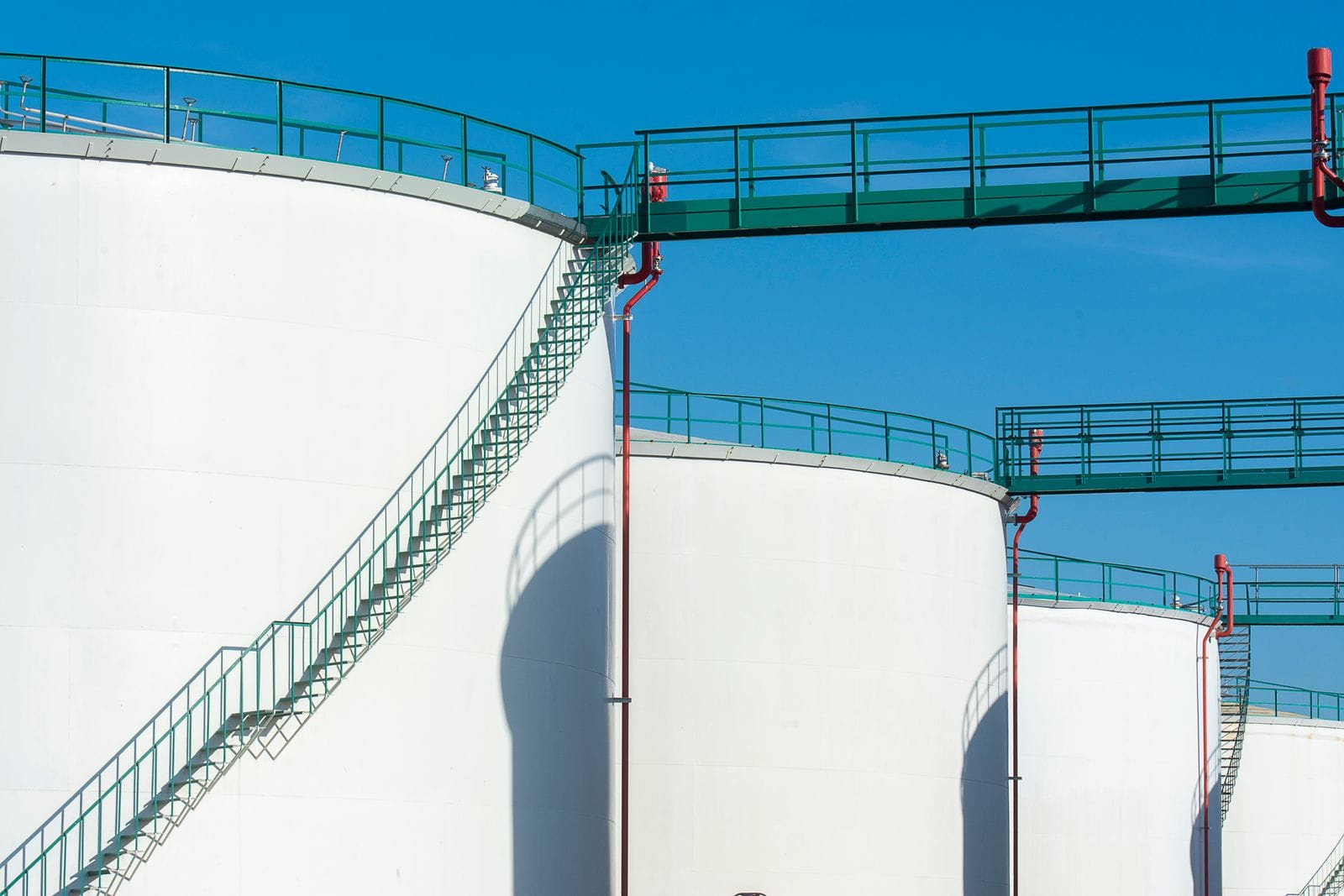
A storage tank rarely fails all at once, but when it does, the volume in it has to go somewhere. Secondary containment decides where. The tank you can see gets the attention, and the wall or liner around it gets forgotten until the day it matters. This guide covers what containment is, how the capacity is worked out, the main ways to build it and the drainage habits that keep it honest. It sits alongside our guides to storage tank types and how an API 650 tank is built.
A note on jurisdiction. The rule quoted here is U.S. federal law, so it binds facilities in places like Puerto Rico and the U.S. Virgin Islands. Elsewhere in the Caribbean the requirement comes from your own authority and your insurer. We use the U.S. text as a widely known benchmark, and you should confirm what applies to your site.
What is secondary containment for a storage tank?
Secondary containment is a second barrier that catches product if the primary tank leaks or overflows. For an above-ground tank it is usually a bund, meaning a diked area around the tank with impervious walls and floor. The tank is the first line of defense. The bund is what stops a failure becoming a spill into soil, drains and water.
Three parts do the work: walls high enough to hold the volume, a floor or liner that liquid can’t pass through, and a way to remove rainwater without letting product out. Get any one of them wrong and the bund becomes a decoration.
How big must the containment be?
The U.S. SPCC rule requires a secondary means of containment for the entire capacity of the largest single container and sufficient freeboard to contain precipitation (40 CFR 112.8(c)(2)). The diked area must also be sufficiently impervious to contain discharged oil. NFPA 30, the fire code for flammable liquids, sets the same starting point for diked areas: capacity for 100% of the largest tank inside (QCSQCI).
The arithmetic is simple, with one subtlety. When several tanks share a bund, the space taken up by the other tanks’ bases below wall height reduces what’s left for liquid, so the gross volume has to be larger than the largest tank alone. Add an allowance for rain, and you have the minimum.
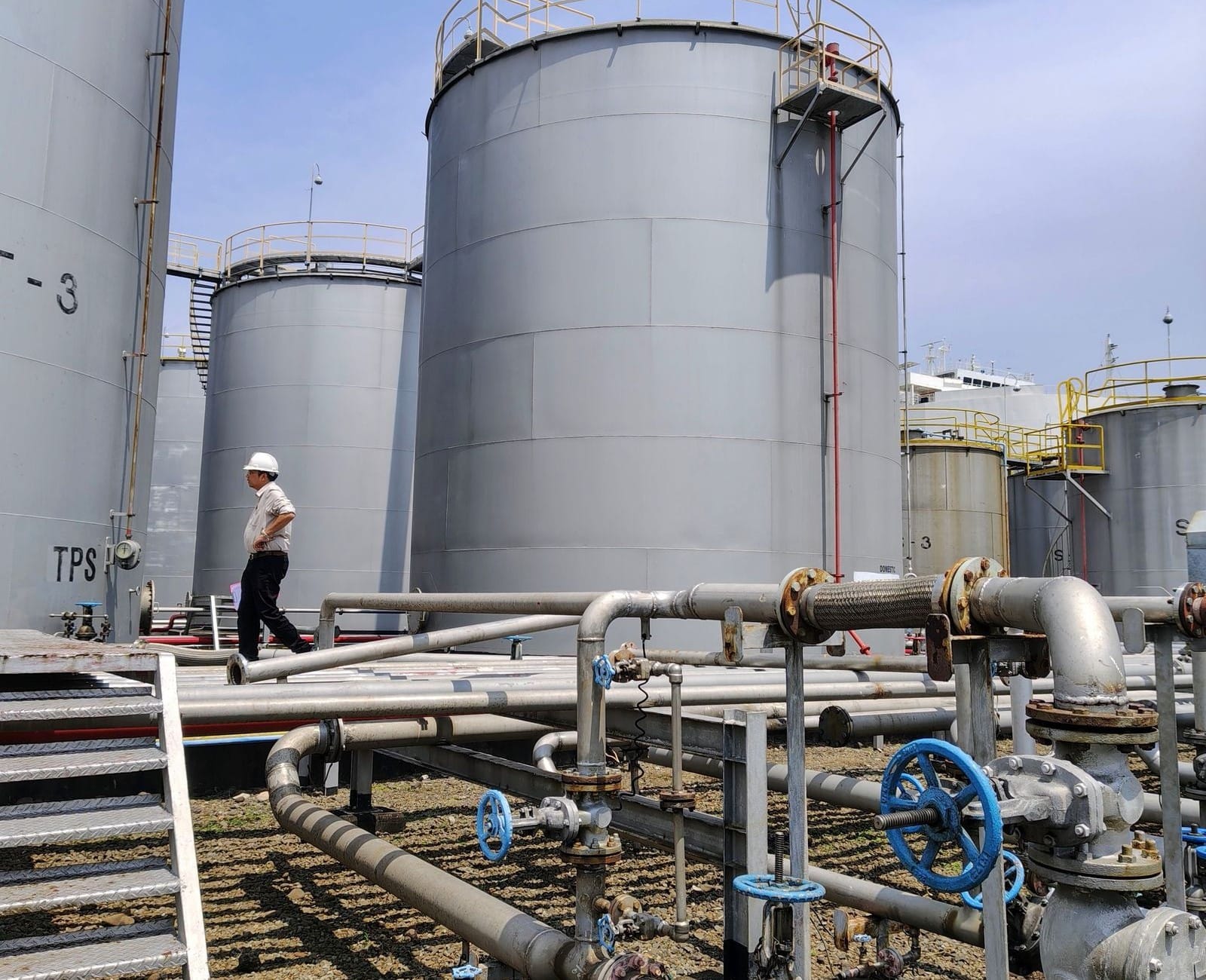
What are the main ways to build containment?
The four common forms are earthen dikes with a liner, concrete walls and floors, double-wall tanks and remote impounding, where a spill is routed to a separate basin. Space, budget, the product and the size of the tank decide among them. The table sets out where each tends to fit and what to watch.
| Type | Where it fits | Watch out for |
|---|---|---|
| Earthen dike with liner | Large tank farms with space | Needs a compacted clay or synthetic liner to be impervious. Slopes erode in heavy rain |
| Concrete walls and floor | Tight sites and tanks near equipment | Joints and cracks. Sealant and coating age and need inspection |
| Double-wall tank | Smaller tanks where a bund won’t fit | Cost, and the space between the walls needs monitoring |
| Remote impounding | Sites where a spill can be routed away from the tank | Drainage routes must stay clear and be checked |
The rule asks for containment that is impervious, and an earthen dike only gets there with a compacted clay or synthetic liner. That’s why a bare gravel bund isn’t containment, however solid it looks.
How do you handle rainwater inside the bund?
Keep the drain valve sealed closed, and open it only under supervision to release clean rainwater. Under the SPCC rule, the bypass valve is normally kept sealed closed, it is opened and resealed after draining under responsible supervision, and adequate records of such events are kept (40 CFR 112.8(c)(3)). A gravity drain left open is the simplest way to lose a full tank’s worth of product.
Practically, that means a valve that is normally shut, a person who checks the water for a sheen before releasing it and a log that shows when it was done. A logbook is dull. It is also the record an inspector or insurer asks for first.
What changes on a Caribbean site?
Rain is the difference. A tropical storm can drop a lot of water in a few hours, so freeboard and drainage matter more than on a dry site. A bund that fills faster than you can drain it needs a plan for the water, and a plan for the tanks: a lightly filled tank in a flooded bund can lift, so the level of product versus the water level is worth checking before a forecast storm.
Salt air also works on the concrete, the steel and the fasteners, and on the tank floor sitting above it. Our corrosion inspection checklist covers the tank side, and our guide on whether to repair or replace a storage tank covers the decision when the inspection finds trouble.
How do you keep containment working?
Inspect it like any other asset. After heavy rain or a storm, walk the bund and check the walls for erosion or cracks, the liner or sealant for damage, the drain valve for its seal and the floor for standing water. Keep vegetation off earthen walls, because roots and burrows make paths for liquid. Record what you find, and repair the small defects before they become the route a spill takes.
Inspection of the tank itself follows its own schedule, which we cover in API 653 inspection intervals. If new tanks, pads or containment walls are planned, that’s a job for tank fabrication and civil crews working from one plan.
- Secondary containment is a bund that catches a spill if the tank fails. It needs walls, an impervious floor and a drainage plan.
- The U.S. SPCC rule asks for capacity for the largest container plus freeboard for rain.
- With several tanks, the other tanks’ bases take up volume, so the gross size is larger than the largest tank.
- Earthen dikes need a clay or synthetic liner to count as impervious.
- Keep drain valves sealed, open them under supervision and keep records.
- In the Caribbean, rain drives the design. Check the bund after every storm.
Frequently asked questions
Planning tanks and containment for a Caribbean site?
Tasweldermechanics fabricates and repairs above-ground storage tanks to API standards across the Caribbean, mobilized from Sint Maarten. Tell us your scope.
Request a quoteView tank fabrication EN
EN ES
ES