
Storage tank types: fixed roof, floating roof and internal floating roof
Storage tanks come in three main roof designs. A fixed roof is the cheapest to build. An external floating roof suits large volumes of volatile product. An internal floating roof combines a fixed and a floating roof and, per the EPA, cuts evaporation by 60 to 99 percent. Match the roof to your product, tank size and emission rules.
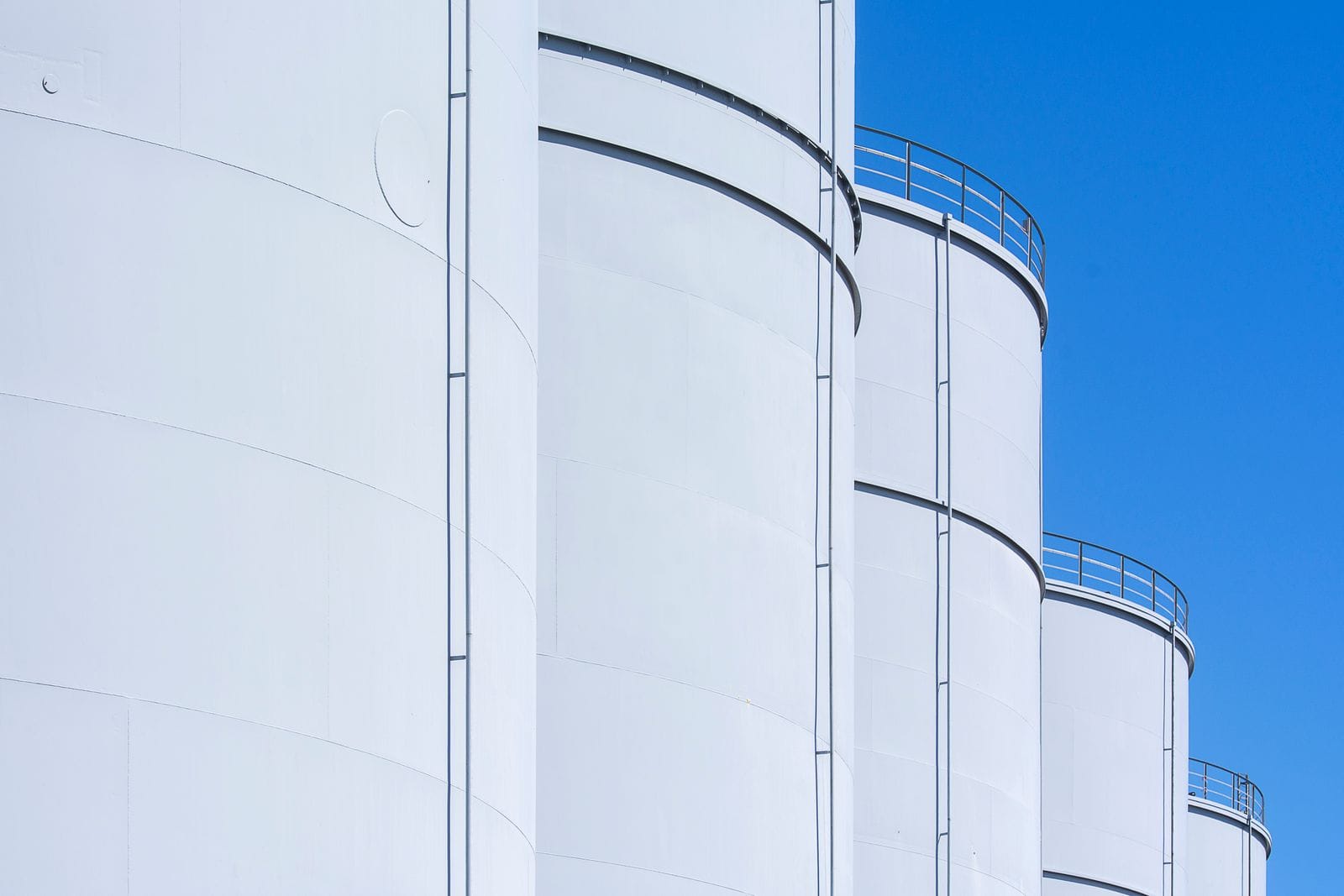
A tank roof looks like a small detail until you add up what it decides. It sets how much product drifts off into the air, how often crews have to climb up to service it, and what the tank costs to build. Among storage tank types, the roof is the feature that changes everything else. Three designs cover almost every case: fixed roof, external floating roof and internal floating roof. This guide shows how each one works, what it gives up, and how to choose.
What does the roof of a storage tank decide?
Losses from fixed roof tanks are caused by changes in temperature, pressure and liquid level (U.S. EPA, AP-42 section 7.1, 1997). That sentence explains why the roof matters. It decides whether vapor escapes when the sun heats the tank, and how much empty space above the liquid is left for that vapor to form.
Every tank in this guide is a vertical, cylindrical, above-ground steel tank, so the shell and floor are broadly alike. Only the roof changes. The figure shows the three designs side by side.
Read it left to right and you’re reading a story about evaporation. The fixed roof leaves a vapor space. The external floating roof removes that space but exposes the roof to the weather. The internal floating roof keeps the weather out and the vapor down, at a higher cost.
What is a fixed roof tank?
A fixed roof tank is a cylindrical steel shell with a permanently attached roof, which can be cone-shaped, dome-shaped or flat (EPA AP-42 section 7.1.1.1). The EPA calls it the least expensive design to build and “generally considered the minimum acceptable equipment for storing organic liquids.” It’s the usual choice for low-volatility liquids such as diesel, fuel oil and water.
Most fixed roof tanks run close to atmospheric pressure. API 650 covers tanks with an internal pressure up to 2.5 psig (17.2 kPa) and design temperatures up to 93 °C (API Standard 650, scope). Higher pressure moves you into API 620, which allows up to 15 psig. Our guide to API 650 vs 620 vs 653 shows where the line falls.
The roof comes in a few shapes. A cone roof is the classic. A dome roof curves upward and can span the tank without interior columns. API 650 Appendix G covers aluminum geodesic domes, which are light and resist corrosion. The cost of every fixed roof is the vapor space above the liquid. Daily temperature swings push vapor out and draw air in, the “breathing” loss the EPA describes.
How does an external floating roof tank work?
An external floating roof tank is an open-topped shell with a roof that floats on the stored liquid and rises and falls with the level (EPA AP-42 section 7.1.1.2). A rim seal closes the gap at the wall, so evaporation is limited to the seal, the deck fittings and the wetted wall. API 650 covers this design in Appendix C.
Today’s floating decks are welded steel plate, in two types. A pontoon deck rides on buoyant rings. A double deck is a buoyant sandwich across the whole roof. Because the roof removes most of the vapor space, the design is common for very large tanks holding crude oil and gasoline.
The price of an open top is exposure. Rain lands on the roof and has to drain away, wind works on the seals, and debris can collect. In the Caribbean, where a tropical storm can drop heavy rain in a few hours, roof drains and seals are worth checking before the season starts.
What is an internal floating roof tank, and is it worth it?
An internal floating roof tank has both a permanent fixed roof and a floating roof inside it (EPA AP-42 section 7.1.1.3). The EPA states that installing an internal floating roof with seals gives a control efficiency of 60 to 99 percent, depending on the roof, the seals and the liquid stored (AP-42 section 7.1.2). That’s the widest gain of any option in this guide.
There are two structural versions. In one, the fixed roof rests on columns inside the tank, which is typical when an older fixed roof tank is fitted with a floating deck. In the other, the fixed roof is self-supporting and there are no columns. The deck either floats in contact with the liquid or rests on pontoons a few inches above it, and most aluminum decks in service are the non-contact type. API 650 Appendix H covers them.
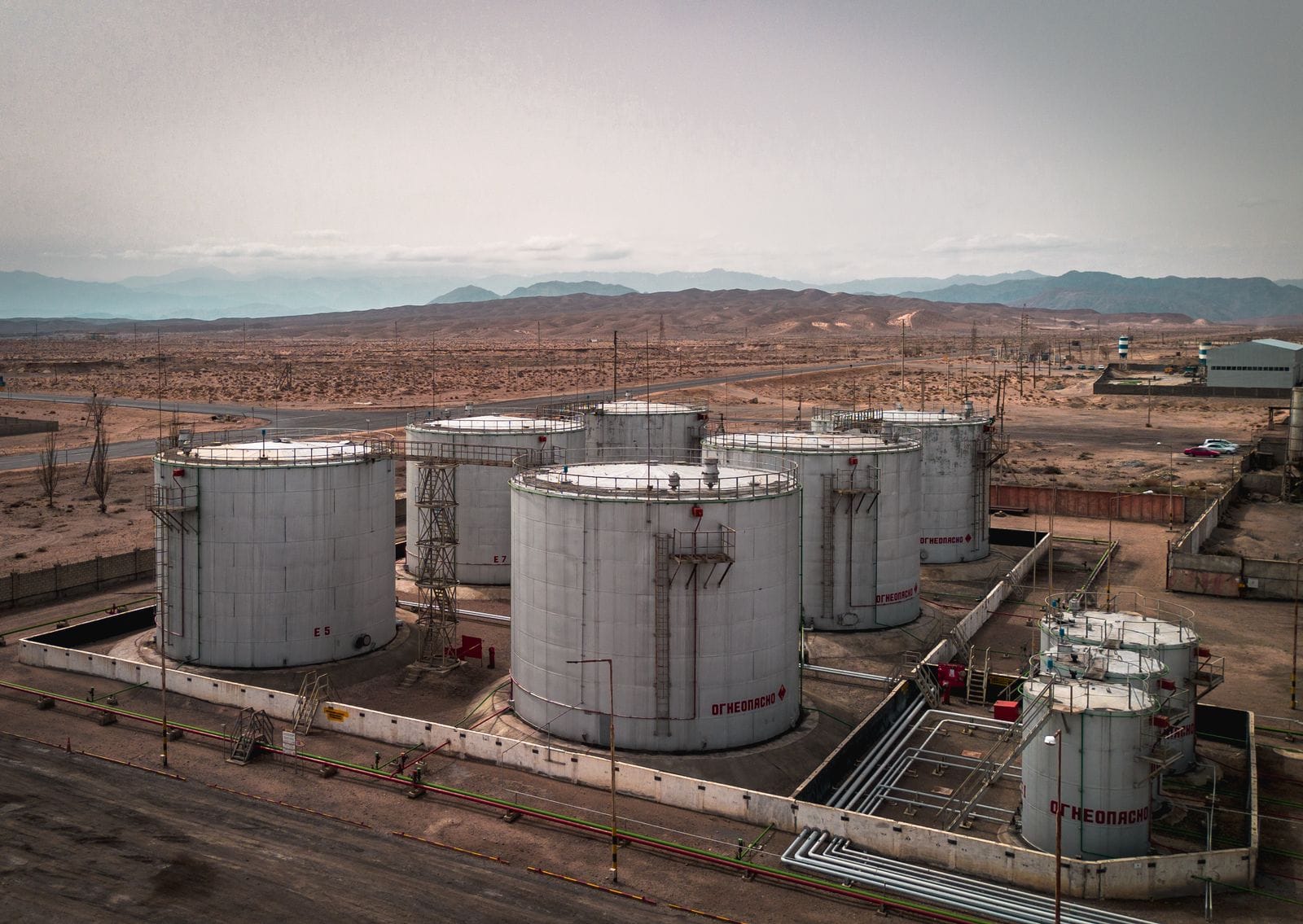
An existing tank isn’t a dead end. The EPA notes that fixed roof tanks are commonly retrofitted with a floating deck, so a tank that loses too much product today can often be improved without starting over.
Fixed roof vs external floating roof vs internal floating roof
Here’s the comparison in one place. The last column matters most, because each design fails in its own way.
| Type | How the roof works | Evaporation control | Typical service | Watch for |
|---|---|---|---|---|
| Fixed roof (cone or dome) | Permanent roof, vapor space above the liquid | Lowest; breathing and working losses | Low-volatility liquids: diesel, fuel oil, water | Vent condition, roof corrosion |
| External floating roof | Open top; roof floats and follows the level | Good; losses limited to seal, fittings and wet wall | Large volumes of volatile product, such as crude oil and gasoline | Rain drainage, wind, seal wear |
| Internal floating roof | Fixed roof plus a floating deck inside | Best; EPA range of 60 to 99% with seals | Volatile liquids where emissions matter | Deck fittings, seals, column openings |
Typical service reflects common practice. The product’s vapor pressure and your local emission rules decide what’s allowed on your site.
How do you choose the right roof for your tank?
Start with the rules, not the roof. Your product’s vapor pressure and your regulator’s emission limits often settle the question before cost enters the room. After that, five checks narrow the choice.
- Product volatility. The lighter the product, the more a vapor space costs you.
- Emission rules. Confirm what your permit requires before the design starts.
- Tank size. On a large diameter, a fixed roof leaves a big volume of vapor to breathe out.
- Weather exposure. An open top takes rain and wind directly. A fixed cover shelters the deck.
- Lifetime cost. A fixed roof is the cheapest to build, per the EPA. A floating roof recovers its cost by keeping product in the tank.
The tank is only half of the picture. Our guide to storage tank secondary containment covers the dike, berm or liner that holds a spill if it fails.
Which standards cover each type of tank?
API 650 sets the minimum requirements for material, design, fabrication, erection and inspection of vertical, above-ground welded tanks near atmospheric pressure. Its 14th edition, published in August 2025, is the current one (Intertek Inform). The roof rules sit in the appendices: C for external floating roofs, G for aluminum domes and H for internal floating roofs.
API 620 handles tanks that need a little more pressure, up to 15 psig. Once a tank is built, API 653 governs its inspection and repair, and we cover the field side in our storage tank corrosion inspection checklist. Once you’ve picked a roof, our guide to how an API 650 tank is built walks through the construction sequence. If you’re planning a new tank, our team fabricates and repairs above-ground storage tanks. See industrial storage tank fabrication.
- Three roof designs cover almost every storage tank: fixed, external floating and internal floating.
- A fixed roof is the cheapest to build, but it leaves a vapor space that breathes with the temperature.
- An external floating roof removes most of the vapor space and is common for large volumes of volatile product.
- The EPA gives an internal floating roof with seals a 60 to 99 percent control efficiency.
- Your product’s vapor pressure and local emission rules should settle the choice before cost does.
- API 650 covers the design; roof rules sit in Appendices C, G and H.
Frequently asked questions
Planning a new storage tank or reroofing an old one?
Tasweldermechanics fabricates and repairs above-ground storage tanks to API 650 and 653 across the Caribbean, mobilized from Sint Maarten. Tell us your scope.
Request a quoteView tank fabrication EN
EN ES
ES