
Rotating equipment failures: what breaks pumps and compressors, and why
Most rotating equipment failures trace back to a short list: bearing damage from contamination or poor lubrication, misalignment, unbalance, looseness, cavitation and overload. In one refinery study, 48% of bearing failures came from particle contamination and about one third from improper lubrication (Pumps & Systems). Each fault leaves a different signature you can measure.
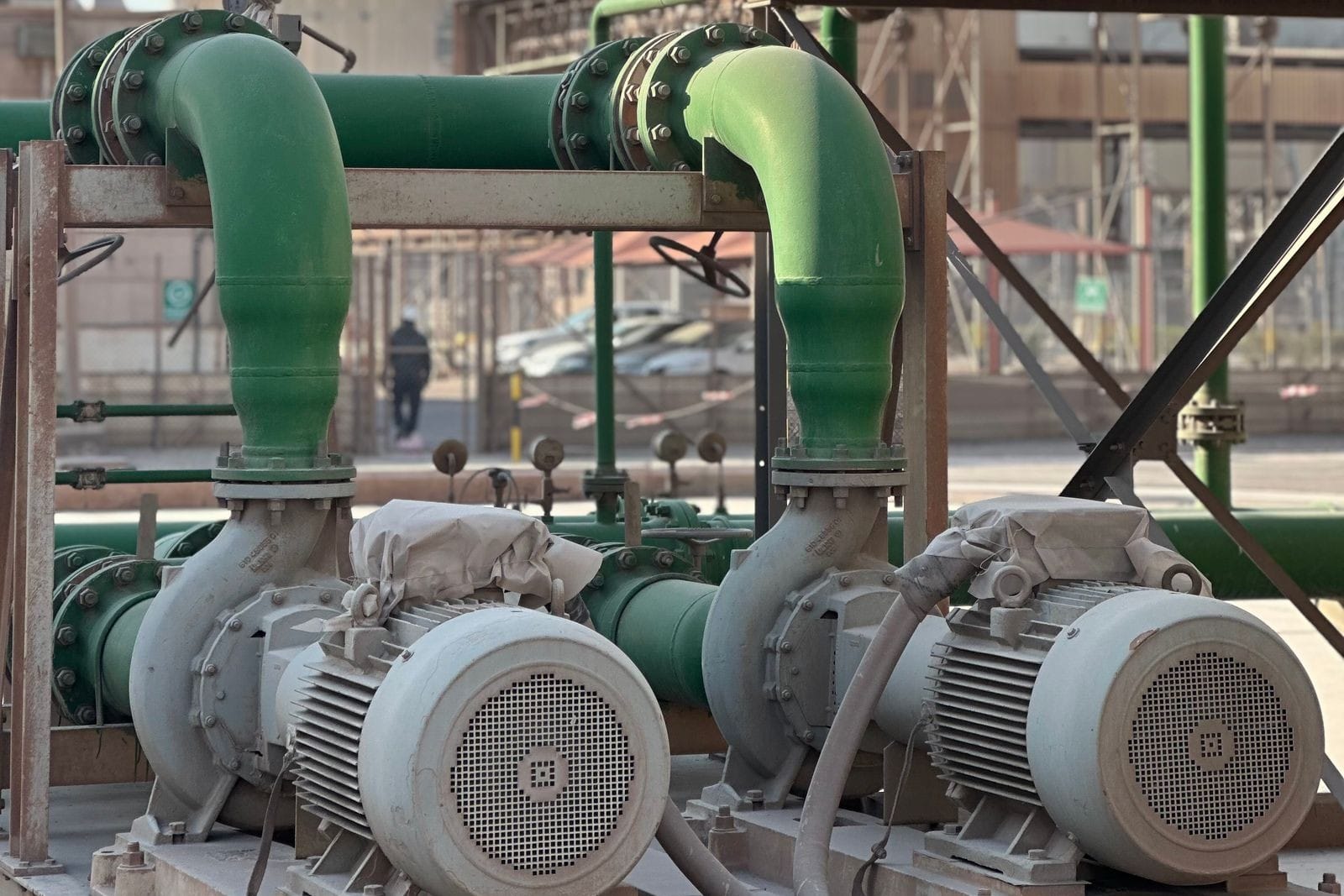
A pump that runs for years without a fuss makes it easy to forget it’s a machine with spinning parts, tight clearances and a lot to go wrong. When it does go wrong, the visible failure is rarely the cause. A seized bearing is usually the end of a story that began with dirty oil or a shaft slightly out of line. This guide sets out the common failure causes in pumps, motors and compressors, how to tell them apart and what a plant on a Caribbean island can do about them.
A note on the numbers. Reliability figures vary by industry and by study, so we quote the source each time and treat the percentages as indications, not constants. If you’re scheduling repair work, our equipment repair service covers pumps, motors and drives.
What causes most rotating equipment failures?
A short list accounts for most of them. Trade guides name improper installation, lubrication problems, contamination, overloading, vibration and lack of maintenance (ISG). Vibration analysts add unbalance, misalignment, looseness and bearing wear, with lubrication breakdown, cavitation and installation mistakes as the usual triggers (Uptime Consulting).
What ties them together is that most are preventable. They come from how a machine is installed, lubricated, kept clean and operated, not from bad luck. That makes them a maintenance question more than a parts question.
Why do bearings fail so often?
Bearings sit where every load, every vibration and every lubricant problem ends up. A refinery reliability study, cited by Pumps & Systems, found improper lubrication behind about one-third of bearing failures, particle contamination behind 48% and corrosion from liquid in the oil behind 4%. It also linked 21% of all rotating equipment failures to oil contamination (Pumps & Systems).
Three causes dominate. Contamination is dust, water or process fluid entering the bearing housing, and even microscopic particles cause abrasive wear. Lubrication cuts both ways, because too much grease creates friction through churning and too little leaves metal touching metal. Misalignment makes bearings carry loads they weren’t designed for, and its vibration can look like a coupling or motor problem (Reliable Magazine).
Reliable Magazine also reports that bearing-related faults account for over 60% of all rotating equipment failures, citing industry studies. Other sources put the share lower, so use that figure as a sign of scale, not a benchmark.
How can you tell which fault you have?
Look at how the machine vibrates and how the vibration changes over time. Each common fault leaves a different pattern, and the table matches them to what you’d see and the usual cause behind it. Uptime Consulting notes that no single method catches every failure mode, so vibration, ultrasonic and temperature monitoring work best together (Uptime Consulting).
| Fault | What you see | Common trigger |
|---|---|---|
| Unbalance | A vibration peak at 1X running speed | Uneven wear, buildup or a damaged rotor |
| Misalignment | Higher vibration in the axial direction | Installation error, pipe strain, thermal growth |
| Looseness | Harmonics at multiples of running speed | Loose bolts, worn fits, soft foot |
| Bearing wear | A gradual rising trend over weeks | Contamination, lubrication breakdown |
| Cavitation | Acoustic emissions from collapsing vapor bubbles | Low suction pressure, restricted inlet |
The “What you see” column follows Uptime Consulting. The triggers come from general reliability practice, so treat them as leads to investigate.
What faults are specific to pumps?
Cavitation is the pump-specific one. It’s the collapse of vapor bubbles inside the pump, and it’s detected by acoustic emissions before it damages the machine. Vibration analysis alone can miss it, because it’s a process problem, not a mechanical one (Uptime Consulting).
That has a practical consequence. If a pump is noisy and its vibration looks normal, look at the suction side and the operating point before you swap parts. The fix may be a valve position or a blocked strainer, not a new bearing.
What changes on a Caribbean plant?
Salt-laden, humid air makes contamination harder to avoid. Moisture and salt can get into bearing housings through breathers and worn seals, and heat thins lubricants faster. That’s our reading of the published causes applied to a coastal site, not a measured Caribbean statistic. It’s a reason to check breathers and seals more often, to store lubricants sealed and to keep motors well enclosed.
Lead times matter as much. Bearings, seals and couplings for a specific pump may come by sea or air, so a plant that keeps its critical spares on site restarts sooner. A larger shutdown is the right moment for overhauls, which we cover in our turnaround planning checklist.
What should you do about it?
Fix the causes in order of how often they appear. Start with alignment and lubrication, because they’re cheap and they drive most bearing damage, then add condition monitoring so the next fault shows up as a trend, not a breakdown.
Check shaft alignment on a new install, after a rebuild and after pipework changes. Pipe strain moves a pump.
Use the specified type, avoid over-greasing and protect it from dust and water.
A slow rise over weeks is your warning. A single reading tells you little.
If a part fails twice, find what loaded it before you replace it a third time.
Bearings, seals and couplings for machines you can’t do without, stored properly.
Overhauls, realignment and rebuilds are covered by our equipment repair and equipment installation services.
- Most rotating equipment failures come from a short, preventable list: contamination, lubrication, misalignment, unbalance, looseness and cavitation.
- In one refinery study, 48% of bearing failures came from particle contamination and about a third from lubrication.
- Each fault leaves a signature: a 1X peak, harmonics, an axial rise or a slow upward trend.
- Cavitation is a process fault. Vibration alone can miss it.
- A part that fails twice wasn’t the problem. Find what loaded it.
- Coastal humidity makes clean lubricant and sealed housings more important.
Frequently asked questions
Pump or compressor giving trouble?
Tasweldermechanics repairs and installs rotating equipment for plants across the Caribbean, mobilized from Sint Maarten. Tell us the symptoms.
Request a quoteView equipment repair EN
EN ES
ES