Industrial Tank Corrosion Prevention in the Caribbean: API 653 Inspection Guide
Caribbean storage tanks corrode 30–40% faster than continental tanks due to salt air, humidity, and marine exposure. API 653 inspections every 5–8 years (not the standard 10–20), combined with cathodic protection and proper coating systems, are the most cost-effective prevention strategy.
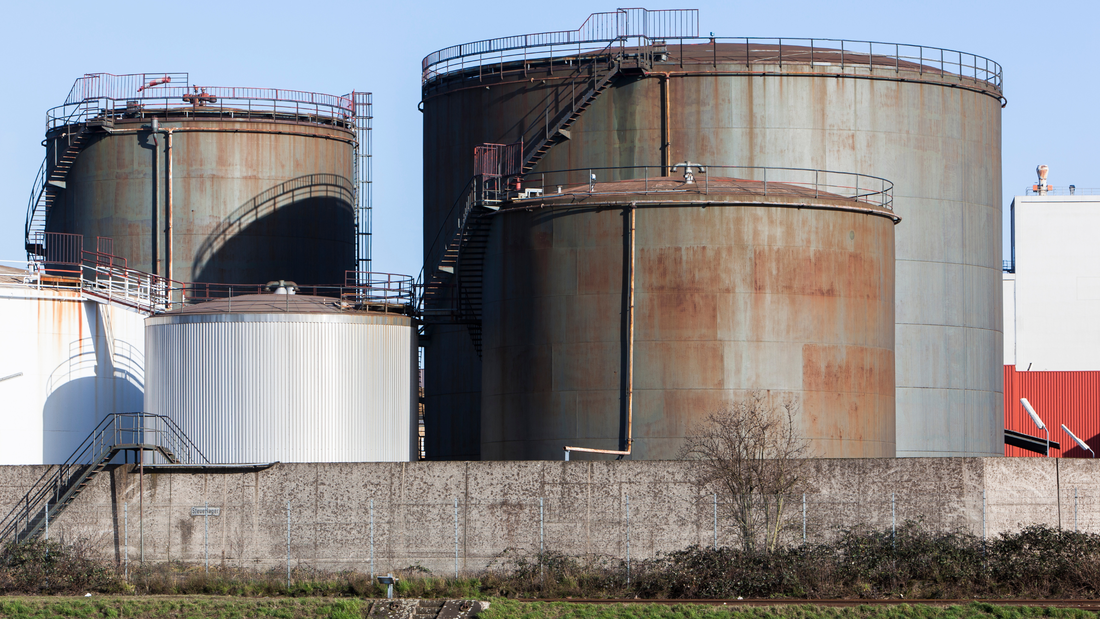
Industrial storage tanks in the Caribbean corrode faster than in continental environments. The combination of salt air, high humidity, tropical heat cycles, and proximity to marine environments creates an aggressive corrosion regime that can reduce a tank’s service life by 30–40% compared to temperate climate projections.
Why Caribbean Environments Accelerate Tank Corrosion
Salt-laden air from the Caribbean Sea deposits chlorides on external tank surfaces, creating electrochemical corrosion cells that attack carbon steel at rates of 0.3–0.8 mm per year on unprotected surfaces. Common failure modes observed in Caribbean tank farms include:
- Floor plate thinning below API 653 minimum thickness thresholds
- Shell-to-bottom annular plate corrosion at the tank/soil interface
- External pitting corrosion under degraded coating systems
- Roof drain plugging causing standing water and accelerated roof plate deterioration
- Nozzle and manway flange corrosion causing leaks at sealing surfaces
API 650 and API 653: Which Standard Applies to Your Tank?
API 650 (Welded Tanks for Oil Storage) covers the design, fabrication, and initial construction of above-ground welded steel storage tanks. API 653 (Tank Inspection, Repair, Alteration, and Reconstruction) applies to existing tanks already in service — defining minimum inspection intervals, thickness assessment methods, acceptable remaining life calculations, and repair welding requirements.
TAS Welder Mechanics provides both API 650 tank fabrication and API 653-compliant inspection and repair services across the Caribbean.
Minimum Inspection Intervals Under API 653
| Inspection Type | Standard Interval | Caribbean Recommendation | Method |
|---|---|---|---|
| External visual | Annual | Annual | Visual + coating assessment |
| UT thickness survey | Per corrosion rate | Every 3–5 years | Ultrasonic testing |
| Internal inspection | 10–20 years | 5–8 years | Full internal entry |
| Floor plate scan | During internal | During internal | MFL or UT scanning |
| Cathodic protection test | Annual | Semi-annual | CP potential measurement |
Cathodic Protection and Coating Systems for Caribbean Tanks
External cathodic protection (CP) using impressed current or sacrificial anodes is the most cost-effective method to extend floor plate and shell life in wet soil conditions common at Caribbean coastal sites. Combined with a properly applied coating system (epoxy primer + polyurethane topcoat), a comprehensive CP program can double tank service life.
TAS Welder Mechanics specifies and applies internal coating systems using certified applicators trained in SSPC surface preparation standards, with product selection based on stored product compatibility, temperature, and steam-cleaning requirements.
- Caribbean salt air drives corrosion rates of 0.3–0.8 mm/year on unprotected carbon steel tank surfaces
- API 653 internal inspections should be shortened to 5–8 years in marine-exposed Caribbean environments
- Cathodic protection combined with proper coating systems can double tank service life in coastal conditions
- Floor plate thinning below minimum API 653 thresholds is the most common failure mode in Caribbean tank farms
- TAS inspectors hold current API 653 certification and provide audit-ready inspection reports
Frequently Asked Questions
Schedule an API 653 Tank Inspection for Your Caribbean Facility
TAS Welder Mechanics provides API 653-certified tank inspections, corrosion assessments, and repair welding for storage tanks across Sint Maarten and the Caribbean.
Request Tank Inspection View Tank Services EN
EN ES
ES